


Housing affordability is often defined in relation to one’s income and its proportion spent on housing costs. However, affordability is also a matter of a series of other elements of daily life, such as energy use, access to shared spaces and equipment, or the availability of various social and care services. The European Urban Initiative-funded project Rock the Block aims to create a vision for housing in Aigaleo, Greece, that provides support to various dimensions of everyday life. In this article, EUI expert Levente Polyák reconstructs a dialogue between the cities of Aigaleo and Getafe that took place at the EUI Housing Lab in Fuenlabrada in November 2025, focusing on these invisible aspects of affordability.
The invisible energy poverty
Eleni (72) lives in a 3-bedroom apartment in Aigaleo, in the North-western Athens agglomeration. She owns the apartment where she lives and plans to stay here, even if it’s too big for her alone. She maintains a good relationship with her younger neighbours who help in her shopping. Since she does not pay rent and her energy bills are not very high, she is not detected as someone with housing affordability problems.
Javier, Maria and their daughter Irene live in a rented apartment in Getafe, in the Southern Madrid agglomeration. Their rent is acceptable in light of their salary and they keep other costs low to arrive at the end of the month. Their neighbours sometimes help with babysitting and they can make savings by using the building’s courtyard for family events. They are not detected as someone subject to unaffordable housing.
Usually, housing is considered affordable if housing costs do not exceed a certain percentage of a person’s income. While the EU Urban Agenda discussions located this threshold at 30%, the EU’s official statistical agency Eurostat, similarly to the Hellenic Statistical Authority ELSTAT, defines a household as facing severe housing cost overburden if total housing costs exceed 40% of their disposable income. When it comes to energy use, according to Brenda Boardman’s 1991 definition, residents are at risk if their energy costs are more than 10% of their income. If we look at affordability from a broader perspective though, there are many details that generally go unnoticed.
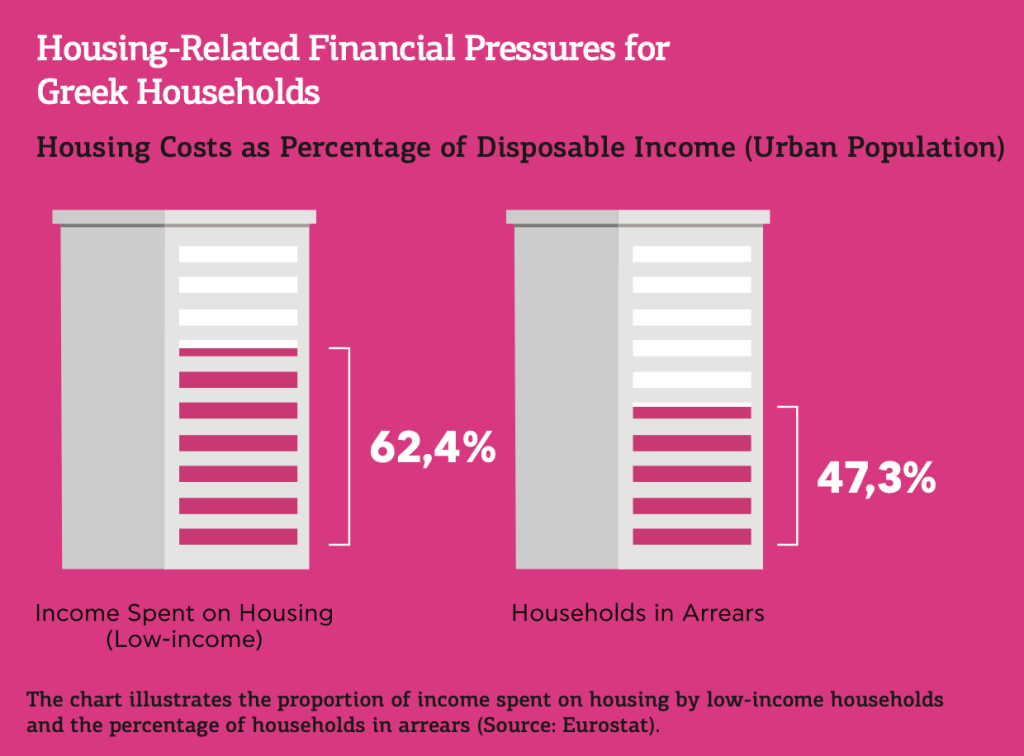
On paper, Eleni and Javier both look like individuals with decent housing conditions. However, Eleni and the family of Javier, Maria and Irene have all made sacrifices to make ends meet. They tend to wear a coat at home in winter, or cover themselves with blankets, and spend summers increasingly struggling with successive heatwaves. They all represent a hidden form of energy poverty.
“We spotted people spending 0% who are still energy poor because they face the ‘eat or heat’ dilemma,” explained Fernando Gonzalez of the Getafe Municipality’s public housing company EMSV (Empresa Municipal del Suelo y la Vivienda) at last year’s EUI Housing Policy Lab in Fuenlabrada, Spain. In discussing the components of affordability with Stefania Gyftopoulou of the Aigaleo Municipality, Fernando reminded us that while “national regulations set up the criteria that a dwelling must meet to be habitable, including arrangement divisions, light and ventilation, accessibility, storage, facilities, equipment, and infrastructure, we must ensure that not only are habitability conditions met, but also that this is done under the conditions of minimum comfort. We can say that a dwelling is not a dwelling until its occupants have access to sufficient energy to live comfortably in that dwelling,” concluded Fernando.
Energy data and education
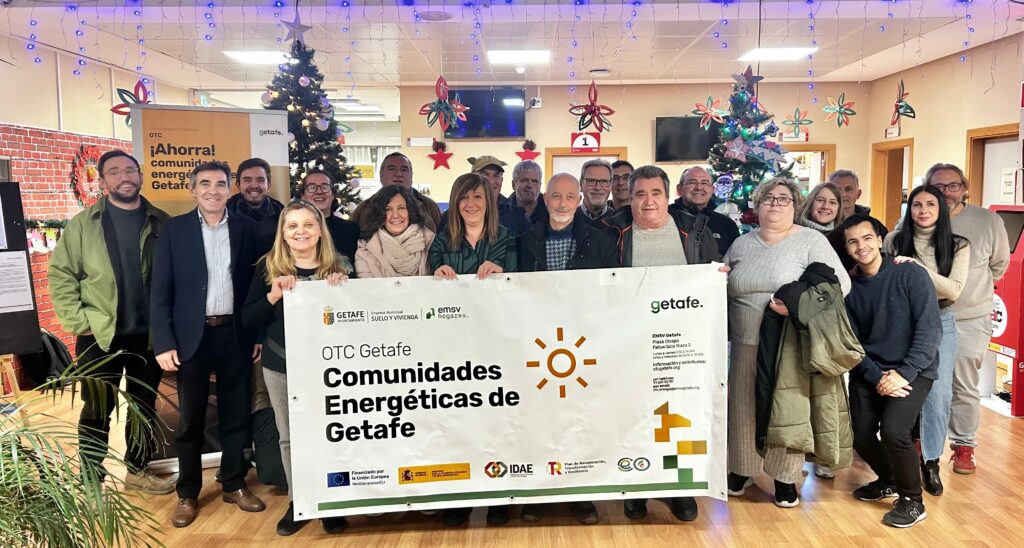
Fernando coordinates the EUI-funded project Energy Poverty Intelligence Unit that identifies and addresses hidden energy poverty in two of Getafe’s most vulnerable neighbourhoods through building tailor-made solutions for relevant households. Using a definition of affordability informed by energy use and comfort, EMSV facilitates access to affordable housing through a focus on the right to energy. This endeavour consists of lowering energy prices, reducing energy demand and helping households produce their own energy – in this ambition, Getafe is a natural counterpart to Aigaleo’s Rock the Block project, which (besides renovating residential blocks) creates building- and neighbourhood-level social networks to reduce costs related to housing.
Getafe’s starting point is energy education: “we have to start with energy literacy before technical or architectural interventions,” suggests Fernando. Energy literacy includes more conscious energy use and bill optimisation. The primary means to Getafe’s educational transformation is the one-stop shop, a physical assistance point together with consistent workshops and street activities designed to empower families rather than just distribute grants. This model represents a shift in municipal logic: instead of giving money to citizens to pay their bills, the city uses that money to maintain a service that teaches residents how to manage their own energy use. “Over three years, we saved more than €1 million in energy costs, while spending less than that to maintain the one–stop shop service,” adds Fernando, proving that education is a far more cost-effective tool for improving housing affordability than direct subsidies.
Getafe uses a data-driven approach, including sensors and surveys, to uncover these hidden realities and provide tailor-made solutions rather than one-size-fits-all measures. Interestingly, efforts to improve comfort among the most vulnerable can lead to an increase in measured energy consumption, as residents who previously did not use heating are finally able to achieve a basic state of health and well-being. This underscores that the primary indicator of energy efficiency should be human comfort and health rather than just a reduction in kilowatts.
The role of resident participation also extends to the neighbourhood scale, where selected buildings act as “ambassadors” to transmit knowledge and skills to the wider community. In Getafe, the strategy recognises that public space is an extension of the home; by acting on the urban environment to reduce summer temperatures, the municipality improves comfort levels inside private dwellings. This broader perspective requires a cross-departmental referral system where data from health services can trigger housing interventions. For example, if a resident presents to a clinic with persistent respiratory issues, the system should ideally recognise that the root cause may be mould or a lack of heating in the home, leading the housing company to intervene and fix the structure rather than just treating the medical symptoms. Participation thus becomes a mechanism for transversal cooperation, where residents help identify the root causes of their vulnerability, leading to more effective public interventions.
The social components of affordability
If Getafe works at the intersection of health, energy and housing affordability, Aigaleo explores other components of affordability such as sharing spaces and equipment, social networks and care. By focusing on the invisible aspects of affordability—such as the time scarcity that leads to poor nutrition or the loneliness that saps social resilience— Aigaleo’s Rock the Block projects aims to create housing that is not just “cheap,” but supportive of different aspects of human life. The integration of co-design, energy literacy, and community management ensures that technical renovations are reinforced by behavioural changes and social networks, making the improvements lasting and meaningful.
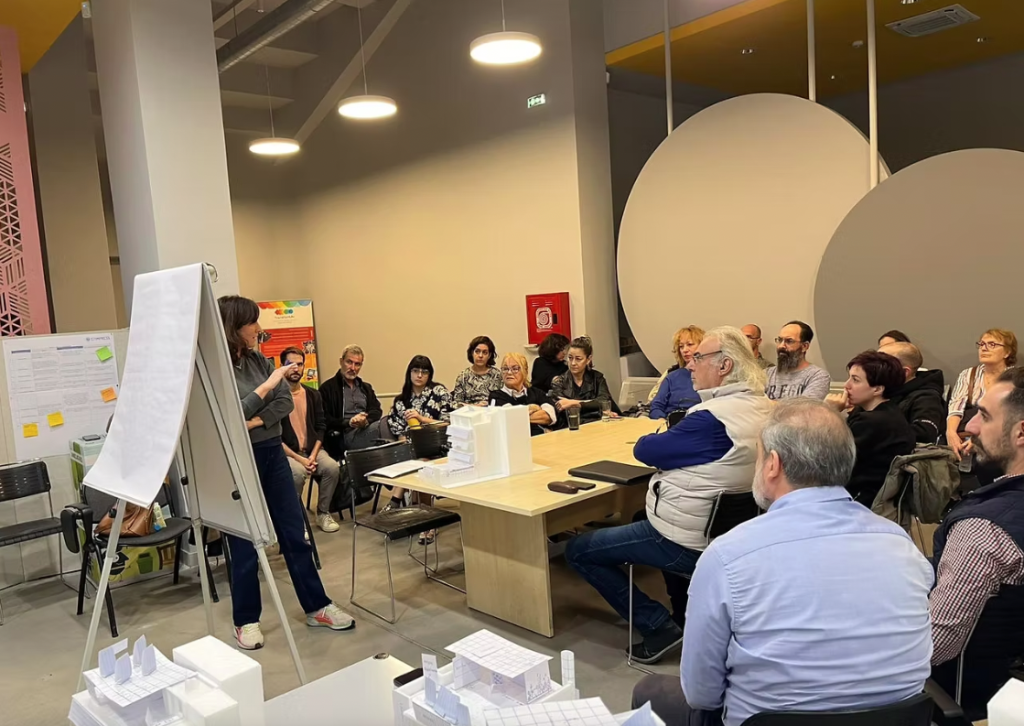
In Aigaleo, the key to understanding the invisible aspects of affordability is mapping “superpowers”, identifying residents’ skills, hobbies, and activities, as well as their daily needs related to care and repairs, moving beyond the traditional physical assessments of housing. “When we say ‘superpowers,’” explains Stefania, “we look at activities or tasks that residents are skilled at or enjoy doing, and by ‘needs’ we mean things residents require in their daily life, also related to caregiving roles, including gardening and green spaces, food and cooking, education and training, care (at home, children, animals, plants), repairs, reuse, recycling, entertainment, shopping, transportation, lending, and exchange.”
By mapping these elements, the project does not only uncover feelings of loneliness and issues related to time scarcity but also the social capital that can be leveraged to improve quality of life without necessarily requiring financial expenditure. For instance, support by neighbours motivated by a desire for mutual care may highlight the invisible social networks that may replace paid services and thus support affordability.
“The workshops made it evident that many people feel loneliness,” recalls Stefania. “A resident who was quite young, about 45 years old, was saying how on her way back home from work she always stops at an elderly neighbour and keeps him company.” Other people blamed eating low quality means on their lack of time. “These invisible aspects of living affordability can be addressed with some sharing of time and resources.”
Networks of care, waste management, and shared spaces
Aigaleo invites buildings participating in the Rock the Block project to develop an integrated action plan that addresses more than just the technical envelope of the building. This educational nudge helps residents understand that a “sustainable” building also requires networks of care, waste management, and shared spaces. The co-design process ultimately translates these resident-led ideas into technical studies that the city can then implement, ensuring that the physical renovations reflect the actual daily requirements of the occupants.
By shifting the unit of intervention from the individual household to the entire building block, Rock the Block can address a systemic cycle of poor housing quality, energy poverty, and weak community bonds. This shift is critical because national housing strategies often focus on the household, leaving shared problems within building blocks unaddressed. Active participation in Aigaleo begins even before the technical work starts, as residents must collectively decide to apply for the project as a single building unit. This requirement fosters an immediate need for dialogue and agreement among neighbours, overcoming the common challenge where low levels of agreement lead to the physical degradation of shared spaces.
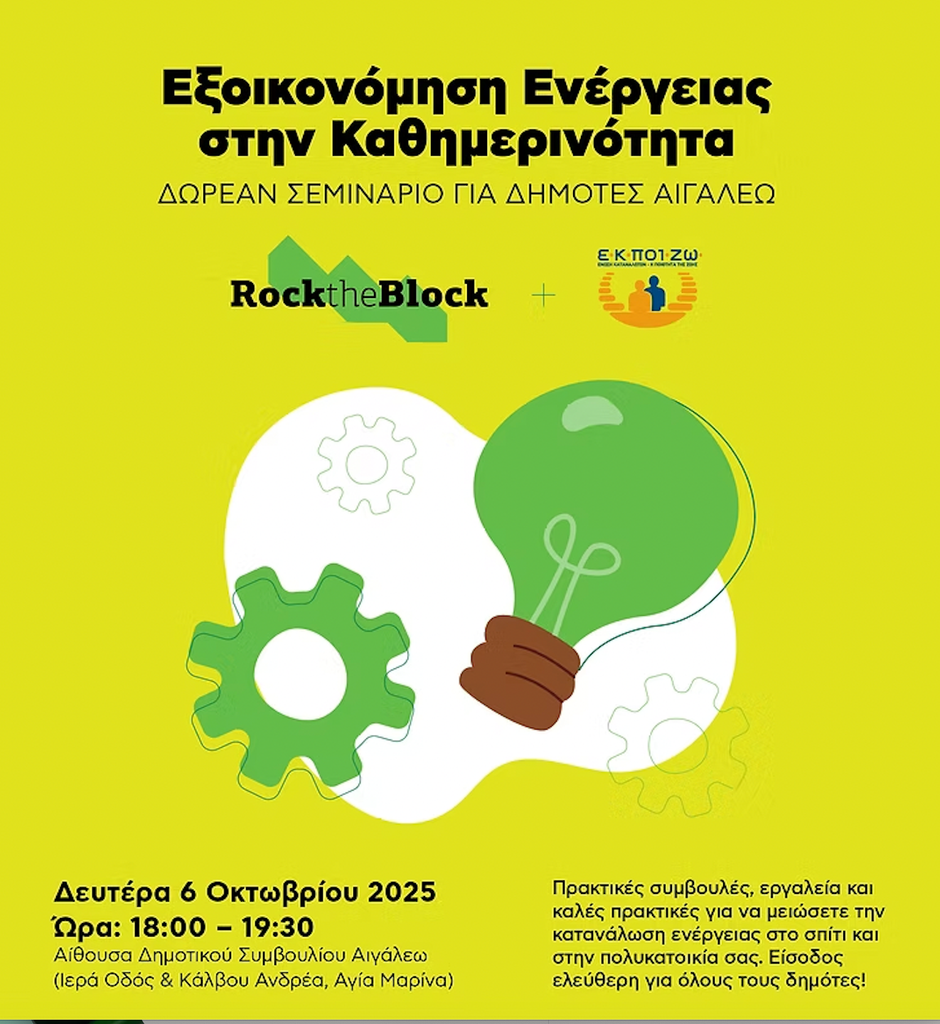
The transformation of urban housing landscapes, particularly within the context of the climate crisis and rising living costs, requires a profound shift from purely technical interventions to holistic, resident-centred strategies. Modern housing policy must move beyond the narrow lens of financial rent to address the invisible aspects of affordability, which include social capital, psychological well-being, and the “right to energy” as a fundamental component of habitability.
The Rock the Block project in Aigaleo and the comprehensive energy strategies in Getafe demonstrate that improving housing conditions requires a deep understanding of resident behaviour, energy literacy and local networks of care, and therefore education and resident participation are not merely supplementary activities but are the primary engines for sustainable improvement in housing conditions.
Written by Levente Polyák for the European Urban Initiative-funded project Rock the Block.
