



After years of being ignored, the housing emergency — homes that are too expensive for ordinary incomes, too poorly built to cope with a changing climate, and increasingly dividing our cities by wealth — has finally knocked on the doors of politics and has become a popular movement.
We see this in Spain, where the eviction of 87-year-old Maricarmen Abascal in Madrid became the catalyst for a much broader mobilisation: following days of protests and encampments, Sánchez’s government approved two decrees to strengthen tenant protections, regulate temporary rentals, and protect vulnerable people from evictions. On October 2, however, Congress voted them down with the opposition of the PP, Vox, and Junts. The following day, tens of thousands of people returned to the streets in about 50 Spanish cities, with 70,000 demonstrators in Madrid alone, according to the government. On October 5, Pedro Sánchez finally dissolved Parliament and called early elections for November 29, turning the housing issue into one of the central battlegrounds of the campaign.
We see it in Berlin, where Die Linke won a historic victory in the Berlin State elections by running a rigorous and radical campaign focused precisely on the housing problem. We see it in Rome, where the eviction of Spin Time Labs sparked a large movement that brought over 50,000 people onto the streets on September 19. Arriving late and unprepared, states are intervening in a disorganised manner, and the European Union, too, seems to have realised that this historical moment requires unified intervention, even if the European Affordable Housing Plan presented in December 2025 has been widely criticised as falling short.
Let us start here: by identifying the root causes of this crisis and proposing concrete tools to try to reverse its trajectory. To this end, a European Citizens’ Initiative has been launched to promote a grassroots proposal calling on the European Union to guarantee the right to housing. Across Europe, there are numerous community-based, anti-speculative housing experiments; it is time to make them grow together!
What the housing emergency means
First of all, to find useful solutions, we first need an objective analysis of the situation: the housing crisis is not the crisis of a single country. Not only does it exist to varying degrees in all European countries (and beyond, as we have also seen echoes overseas, for example in the electoral campaign that led Zohran Mamdani to become mayor of New York), but it affects areas with vastly different cultures and markets, regardless of their GDP, when they joined the Single Market, or their political leanings.
The concept of a “housing crisis” in Europe encompasses a wide range of interconnected issues. Although specific manifestations may vary from city to city and country to country, certain trends and characteristics allow us to group them into a single phenomenon that must necessarily be understood and addressed in its entirety, intervening in every aspect.
Environmental sustainability is the first critical dimension of the housing challenge. Housing construction and management have significant environmental impacts, from energy consumption and greenhouse gas emissions to resource depletion and waste generation. There is a growing need to adopt sustainable building practices, improve energy efficiency, and promote environmentally responsible urban development. The heatwave that hit Europe this summer has also made one issue clear: homes urgently need to be adapted so that people can live in them safely through increasingly intense heat, and these adaptations must also be affordable for those on low incomes. Climate change is widely recognised as amplifying social inequalities, and Europe must begin taking measures to protect its citizens.
The growing gap between housing costs and average incomes is another significant factor. This affordability crisis affects not only those with lower incomes, but also a growing segment of middle-income workers who find themselves priced out of the most desirable urban areas. Several factors contribute to this, including market speculation and rising construction costs. Above all, in many urban centres the supply of available housing has failed to keep pace with rising demand. This imbalance is attributable to various factors, such as rapid urbanisation, population growth, and land development restrictions. The resulting competition for housing units drives up prices and rents, making it difficult for residents to secure stable and affordable housing.
Beyond the simple provision of shelter, there is a growing recognition of the importance of creating socially inclusive communities. This implies addressing patterns of segregation and promoting the development of mixed-income neighbourhoods where people from diverse backgrounds can live together. Housing policy is increasingly viewed as a tool to foster social cohesion and reduce inequalities.
The European Union plays a role in addressing these challenges through initiatives such as the Housing Partnership of the Urban Agenda for the EU. This agenda aims to promote collaboration and knowledge sharing among member states, encouraging integrated approaches to urban development that prioritise housing affordability, social inclusion, and environmental sustainability. The EU Commissioner for Energy and Housing plays a key role in supporting these policies and ensuring their effective implementation.
Some models of the right to housing in Europe
In recent years, various housing models have developed in Europe that promote anti-speculative and grassroots development, which can serve as inspiration across the continent.
Community Land Trusts (CLTs) offer a unique and increasingly popular approach to ensuring long-term housing affordability. The CLT model involves a non-profit organisation acquiring and holding land in trust for the community. Housing units are then developed on this land, and residents own the homes but not the land itself. This structure prevents land speculation and ensures that housing remains affordable for future generations.

Co-housing is a model that prioritises community living alongside individual privacy. Residents have their own private homes, but also share common facilities—such as kitchens, dining rooms, and gardens—and participate in shared activities. Co-housing can address social isolation, promote a sense of belonging, and encourage intergenerational living.
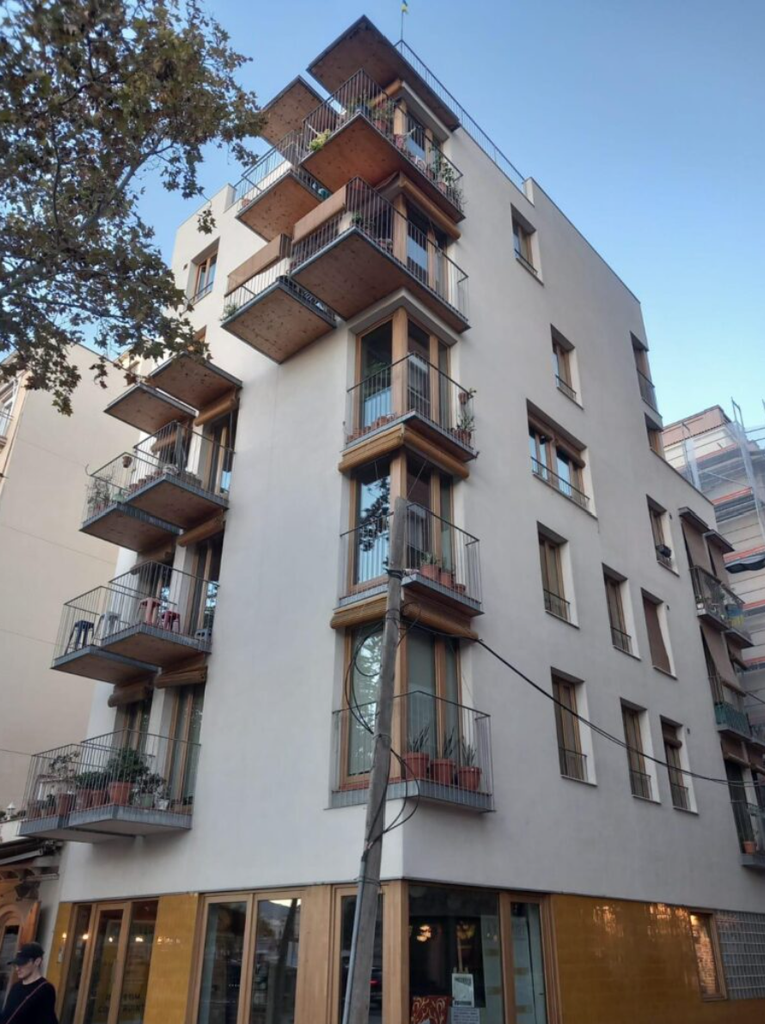
The Housing First approach represents a fundamental shift in how homelessness is addressed. Instead of requiring individuals to meet certain preconditions (such as sobriety or employment) before accessing housing, Housing First prioritises the provision of stable, permanent housing as a first step. This approach is based on the understanding that having a secure home is essential for individuals to tackle other challenges and rebuild their lives.
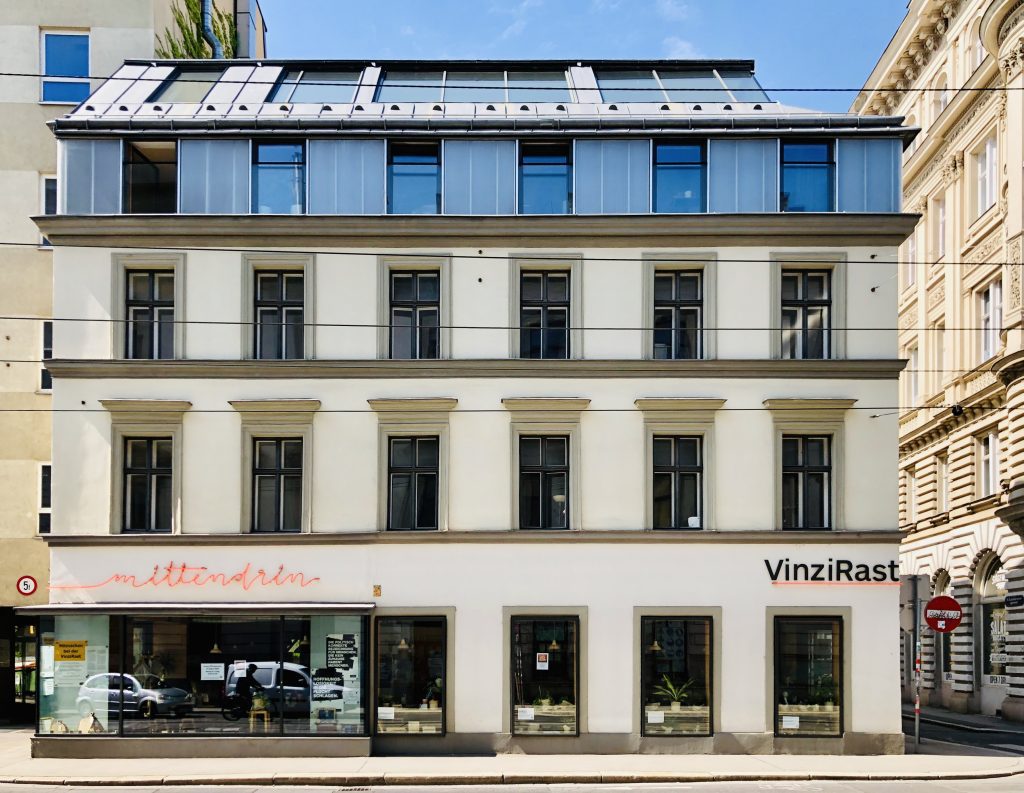
Revitalising cooperative housing is a tool to moderate house prices in our cities. To achieve this, a forward-looking public housing policy is needed to stimulate the development of cooperative housing by unlocking this model’s potential for lasting affordability. Making public land available to cooperatives and combining it with targeted investments of social impact capital—such as ethical investment funds or social impact bonds—can create a powerful and sustainable financial mechanism. Such investments not only provide the necessary initial capital at low cost, but also tie the project to measurable social objectives, ensuring that new cooperative housing is not only built, but remains affordable and community-oriented, contributing significantly to a fairer and more inclusive urban landscape.
The European Citizens’ Initiative on the Right to Housing
“Right to Housing! Now and Forever” is a European Citizens’ Initiative (ECI) promoted by a network of organisations, including main promoters House Europe! and Volt Europa (with which two of the authors are affiliated). The ECI is a participatory democracy tool that allows EU citizens to directly invite the Commission to present new legislative proposals. To be examined, the initiative must collect at least one million verified statements of support, reaching a minimum threshold in at least seven member states within one year.
The campaign structures its demands around three macro-areas of intervention:
- Use and recovery of existing building stock (USE): Intervene in the urban fabric to curb speculation and land consumption. It calls for stringent rules against unregulated short-term rentals and vacant homes, the conversion of disused offices into affordable housing, and tax relief (with reduced VAT rates) to encourage the energy retrofitting of existing buildings.
- Public funding and investments (INVEST): Put the public interest back at the centre of housing policy by calling for the establishment of a European fund for public, cooperative, and social housing. A reform of EU fiscal rules is also needed to allow states to invest massively in the sector, ensuring public money does not end up fuelling speculation.
- Tenant protection and stable standards (PROTECT): Establish binding European affordability criteria to keep costs affordable for middle and low incomes, and combat renoviction practices (evictions disguised as energy efficiency interventions). Finally, it calls for the establishment of a European Housing Agency to coordinate and monitor housing policies in the EU.
The underlying goal is to shift the paradigm: view housing not as a commodity of global finance, but as a fundamental right and a pillar of social cohesion. At a time when the European Affordable Housing Plan fails to address speculation, the central role of the public sector, and the need to promote the social dimension of housing, we invite collaboration in building a grassroots proposal.
For more information and to sign go to European Citizens’ Initiative “Right to Housing! Now and Forever”.
Towards a European Right to Housing
The housing market is profoundly unbalanced because it operates without adequate public correction at the scale it now functions, generating a striking asymmetry between international economic integration and local social disintegration. The European Union already impacts the real estate sector indirectly, but continues to do so without assuming any social responsibility: we are faced with a fully integrated market devoid of an integrated welfare system to balance it, European free movement of people and capital completely detached from common housing policies, and the free circulation of transnational capital in the total absence of transnational rules. In this scenario, inertia is not neutrality, but a precise stance in favour of those who already benefit from the system. Since protests and analyses have shown that the causes of this crisis are deeply European (cross-border investment funds buying up rental homes are one example), it is clear that the response must be equally European. The European Union is best placed to introduce an effective corrective, and it is urgent to act swiftly because citizens are loudly demanding it. The logical and structured solutions we advocate are not marginal alternatives, but the only viable path to right a drifting system and restore justice, stability, and housing rights in Europe.
Virginia Camoletto*, Lorena Papini*, Daniela Patti**
*Volt Europa in Italy
**Eutropian
