
In order to curb climate change, the everyday infrastructure of our lives must evolve to support accessible sustainable decision-making. MKB, Malmö’s municipal housing company, is implementing a programme called hållbar vardag (sustainable everyday living), which integrates sustainable solutions directly into tenants’ daily lives. This initiative is reshaping how residents can lower their environmental impact through smart interventions embedded in their homes. Rather than applying a one-size-fits-all approach, MKB adapts solutions to the specific needs of each neighbourhood and involves residents in decision-making to increase long-term impact. Through onboarding and continuous communication, the hållbar vardag initiative aims to make sustainability part of everyday routines across its housing stock in Malmö. We spoke with Jenny Holmquist and Linnea Wettermark, representatives of MKB, as part of the Good Cities Sharing Solutions for Sustainable Cities webinar series. They discuss the development of hållbar vardag and how practical sustainability measures can be embedded in everyday life.
Can you introduce yourselves and MKB?
My name is Jenny Holmquist and I am the Environmental Strategist at MKB, and my colleague, Linnea Wettermark, is an Environmental Developer in our team. Our job is to support the whole company with environmental questions and environmental goals. MKB is a housing company that operates exclusively in Malmö, Sweden. Malmö is an exciting city with a young population, 27,000 university students, and 186 different nationalities. Malmö, compared to other large cities in Sweden, has a higher unemployment rate and a median income slightly below the national average.
MKB operates solely in the rental market and is fully owned by the City of Malmö. We have approximately 27,000 apartments, which means about one in six Malmö residents lives in an MKB apartment. Over the past 10 years, we have added over 5,000 apartments. Although we are a public housing company, we are not “social housing”; we work on market solutions similar to private companies. We operate in roughly 30 different neighbourhoods, ranging from socioeconomically challenged areas to high-income areas.
What are MKB’s sustainability goals?
We have three main goals for 2030 regarding environmental sustainability. The first is resilient outdoor environments, which is exemplified by the planting of a microforest with residents of our neighbourhoods. The second is circular material flows, which for us means source sorting, reuse of building materials, and sharing and reuse options for our tenants. The third major goal is climate-neutral construction and housing, which is a tough goal as it has to do with a lot of different aspects of carbon emissions.
When we analysed our value chain, we realised that while construction and energy are major emission sources, a significant amount of carbon emissions occurs while people are living in our homes. We often say we don’t just work with housing; we work with homes. The people who live in them are the most important to us. Considering carbon, we realised that we need to work with what happens when people live in the houses. Because of this, we realised we had to increase our work with tenants to make sustainable choices easier for them. We were then tasked with providing a definition and a plan to address the emissions of the tenants. This plan then became the programme of sustainable everyday living or hållbar vardag.
Can you describe the philosophy behind hållbar vardag?
We know that food consumption is a big contributor to household carbon emissions; however, as a housing company, we are not directly involved in these decisions. However, there are other major sources of carbon emissions that we can influence. We analysed the climate impact of a household and identified three areas where a housing company can truly integrate solutions: energy, resources, and mobility.
We created a “pyramid” framework. The base consists of high-quality baseline environmental solutions—things like source sorting, bike schools, car charging stations, and low-energy appliances. On top of that, we decided that each neighbourhood must offer at least ten additional solutions that enable a sustainable everyday life. These solutions need to be within the areas of energy, resources, and mobility.
A crucial part of this is what we call “Perfect Onboarding”. We need to reach people and tell them what exists and how to use it. We also know that 27,000 households need different things, so we ensure customer relevance by letting residents participate in choosing which solutions to implement. Our plan is that each neighbourhood will have its own set of solutions. These solutions should be relevant; for example, seniors have different needs from students. The method is that the staff in the neighbourhood choose from a list of 30 different solutions, integrating resident influence on the selections, with our goal for these solutions to become a core part of our value offer.
What are some specific solutions of hållbar vardag?
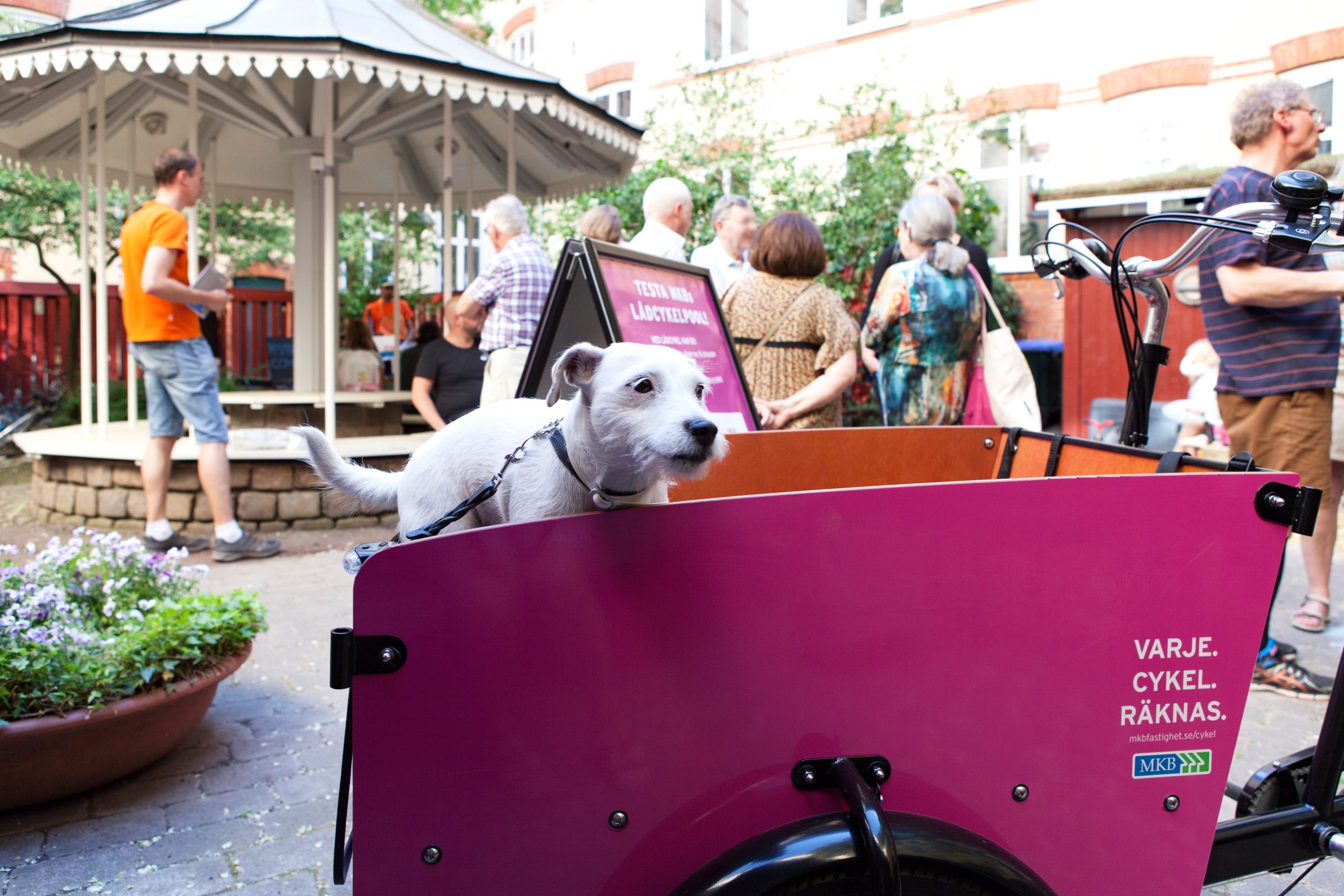
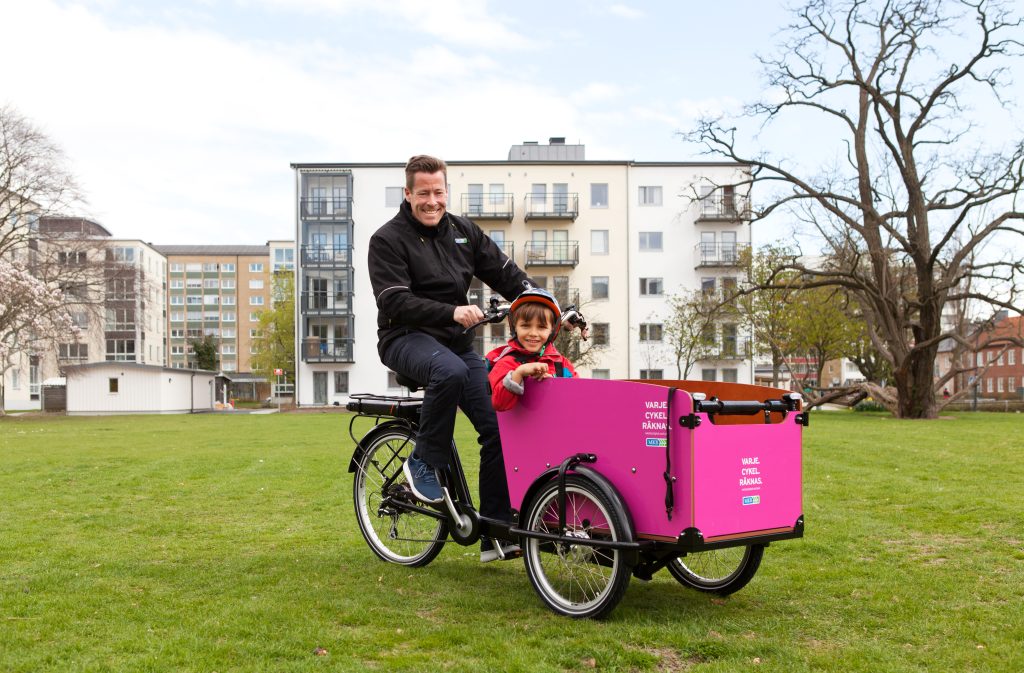
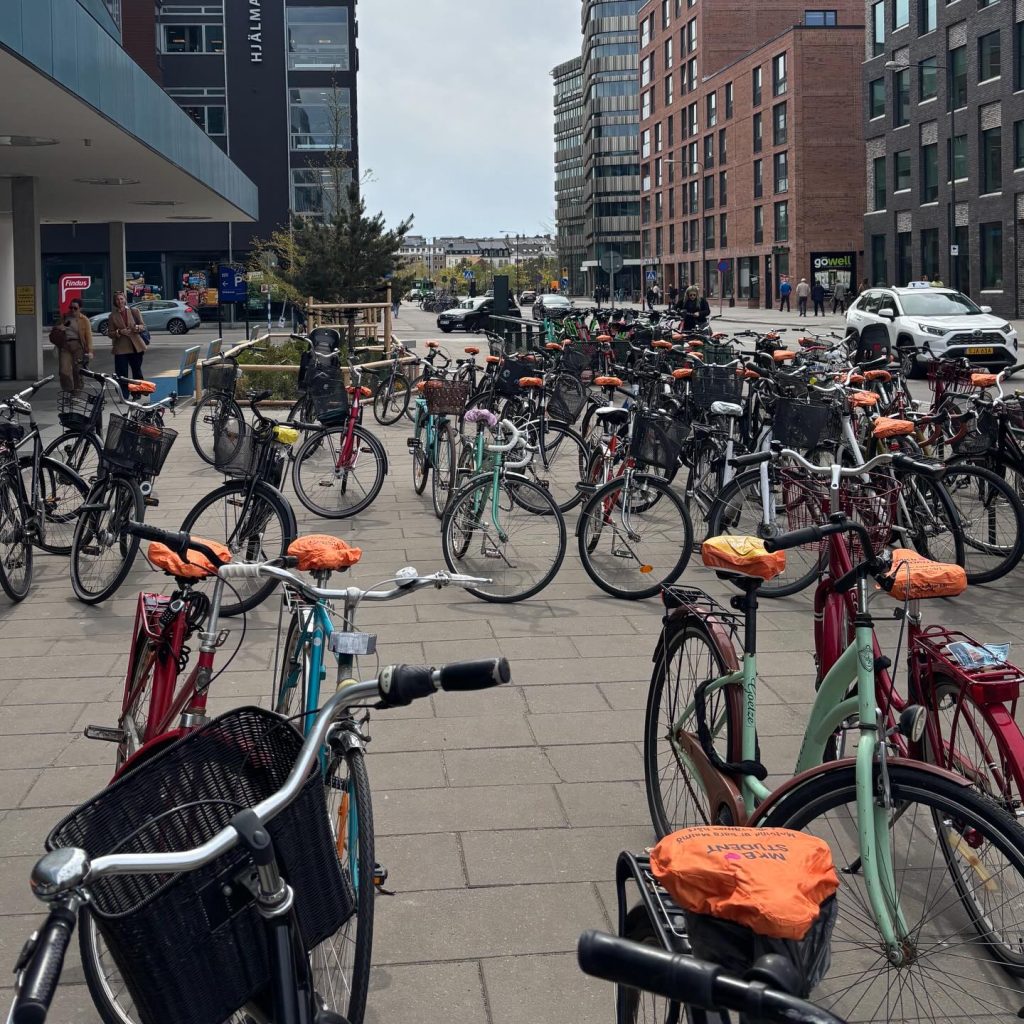
So far, we are working on creating weather-protected, secure bicycle parking and indoor and outdoor bike stations where customers can easily repair their bikes and fill up their tires. One of our most popular mobility solutions is the cargo bike pool. Residents book them via an app for a low fee, less than one euro per hour, which is perfect for grocery shopping or taking kids to the beach. There are instances where some of the bikes’ batteries have been stolen, but we are working on solutions to address these issues.
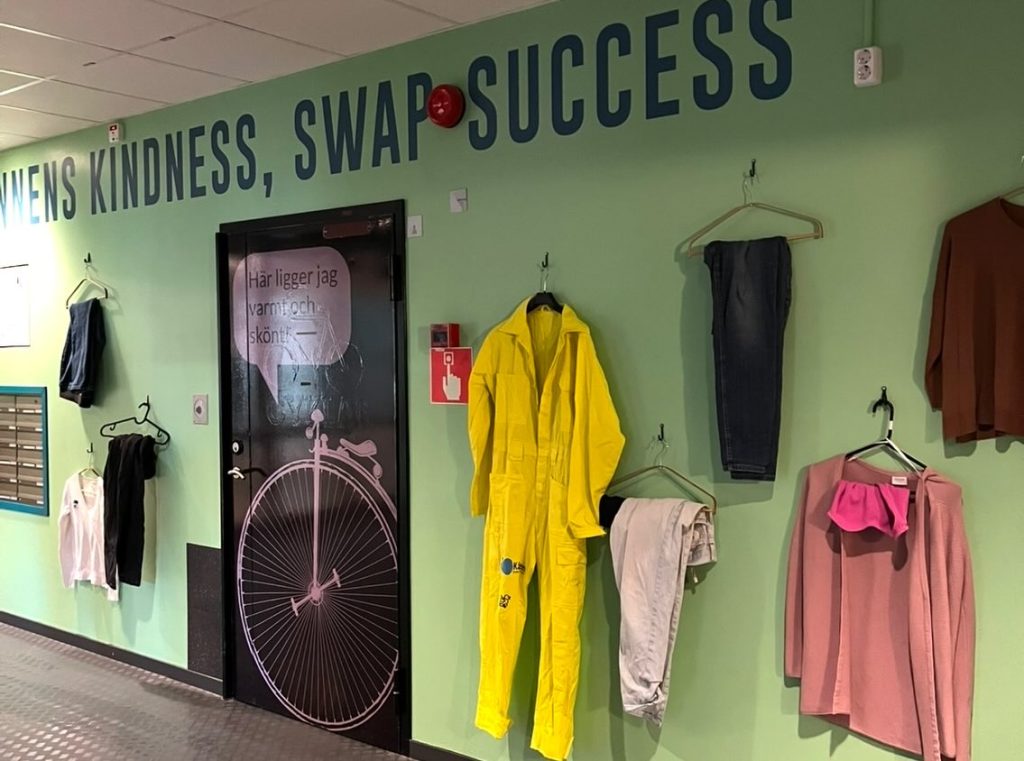
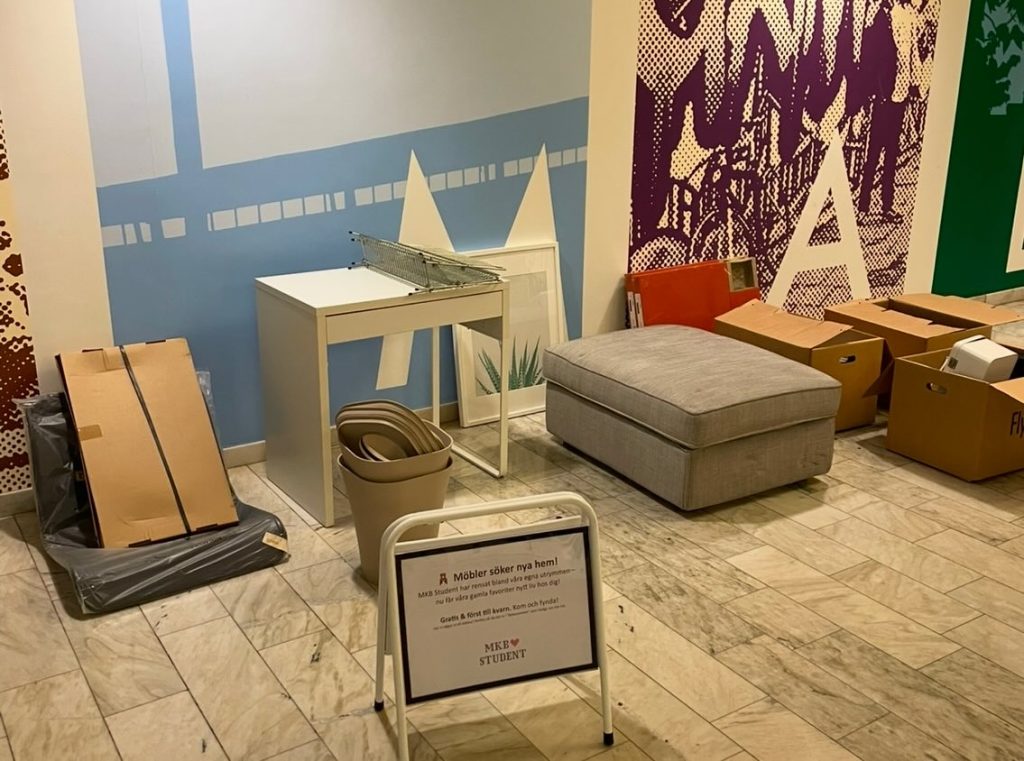
Regarding resident involvement, we use an app called Boappen to communicate with residents and ask them to rank the options they would like most. In 2025, we worked with MKB Student, which includes student residences across the city. We invite our residents to submit their own suggestions for activities in the Boappen, and rank our own submitted suggestions for initiatives. For instance, our student residents requested a “Wall of Kindness” for high-quality clothing swaps, which has been very successful.
We also have hobby rooms and bicycle repair stations already existing in some MKB apartment buildings. For example, MKB Oxie ran a pilot project allowing residents and contractors to share tools. Similarly, in MKB, Augustenborg hosts monthly “patch and repair” workshops with an external partner, which provides instruction for how to mend and repair household items. MKB student has a do-it-yourself repair shop as well as shareable items such as ladders, a sewing machine, and footballs.
Another initiative is Piffl, which is an outdoor sharing box that can be accessed through an app. This can be expensive, so we are working on developing our own similar solution. We have found that outdoor sharing boxes can sometimes be difficult to manage; for example, they can be misused for illegal activities. We are now looking into moving those boxes indoors so we can keep better track of what is happening. Something that has become clear is that it is not enough simply to introduce a solution or initiative. You have to manage them and make sure they can practically work within our neighbourhoods.
We also try to promote the local Fritidsbanken, which are places where people can borrow sports and leisure equipment like skis and camping equipment for up to two weeks for free. We also have swap rooms managed by volunteer tenants, community rooms for parties or study groups, and even a rehearsal room and theatre in one of our basements. In some areas, we offer bookable overnight apartments for residents’ guests at a lower price than a hotel. We also have urban gardens, beehives, and even chicken production in some neighbourhoods.
What are some lessons you’ve learned since implementing this programme?
In 2025, we completed the MKB student section of sustainable everyday living and will expand this initiative into three new residential areas in 2026. We will expand this programme in 2026 into Augustenborg, Bellevuegården, and Limhamn, which are all totally different areas and neighbourhoods. We learned a lot about communication and the importance of onboarding. It was a great start to shape the project, the concept, and our aim to implement sustainable everyday living into all of the neighbourhoods in 2030. In addition to this initiative, we conducted a waste optimisation programme, which focused on reducing residential waste and increasing the source separation rate.
Not every neighbourhood has all of the initiatives, and not all people in the neighbourhood are close to the solutions. So the concept is that adding volume, adding more than one solution in order to eventually get up to ten, will allow everyone in the neighbourhood to be able to know that the solutions are available. We are also participating in an external research project called “Consumer Demand for Circular Living” to learn about willingness to pay for sharing solutions. This is a Driving Urban Transitions (DUT)-funded project, led by RISE in Sweden. We’ve learned that experience in sharing increases interest; once people are introduced to it, they want more. So for us, our tenants need to be exposed to the sharing initiatives in order to be interested in additional sharing solutions. Households with children and people who believe in the environmental benefits of sharing are generally more interested. Interestingly, attributes like “bookability” are very important; people want to be able to predict if a resource is available and use it on their own rather than always using it together with others.
How do you introduce MKB’s services to new residents?
The app we use is not specific to hållbar vardag, but it is a part of our overall housing system. We use the app as our first communication channel, but we don’t leave any group out. If people aren’t using the app, we add other channels like notes in the stairway, SMS, or traditional letters for older residents.
When new students move in, they are shown around, and all the sustainability solutions are introduced during their walkthrough. We also send messages through the app to alert them when new items are added to a sharing station. Our goal is to package this process so it becomes a standard part of our move-in procedure for all 3,000 new residents we have each year.
What are MKB’s institutional practices that lead to a successful implementation of the initiatives?
When we implement new initiatives in the neighbourhood, it is done with all the various colleagues working with customers and communication, people working to make sure the bike repair shops are functioning. We divide responsibilities so that some solutions are about community building while others are about maintenance. Keeping these services as part of the everyday work of our colleagues is one of our main challenges, but also one of our highest priorities. We want fewer solutions of higher quality rather than just adding volume without communication. Our colleagues need to be interested in the initiatives, which they are, as the initiatives need to last for years to come.
Most of what we do is based on previous trials, so we try to take a practical approach—doing something even if we don’t have all the facts and then discovering things along the way. Sometimes, finding the small details that make a solution work practically is the biggest surprise.
