
Energy is among the most abstract elements of modern life. Despite being at the core of public debate at least since the latest cost of living crises and current efforts to implement a green transition, general knowledge about energy tends to be very low, with few people confidently knowing where the energy they use was produced, how has it arrived to their homes, offices and factories, and how to use it in the most efficient and affordable way.
The experience of Getafe, a medium-sized city in the south of Madrid represents a pioneering shift in how municipalities address the intersection of housing and energy. At the heart of Getafe’s strategy is a radical redefinition of the constitutional right to housing, which they argue is fundamentally linked to the right to energy. The municipality’s housing company EMSV (Empresa Municipal del Suelo y la Vivienda) operates on the foundational belief that a dwelling cannot truly be considered a dwelling until its occupants have the necessary and sufficient energy to live with a minimum level of comfort and habitability. The amount of energy required depends largely on the quality of the building.
By moving away from a model of passive financial assistance and towards a framework of education and empowerment, Getafe has demonstrated that improving housing conditions requires a deep understanding of resident behaviour, energy literacy, and the invisible dynamics of poverty.
We spoke with Fernando González, representative of Getafe’s housing company at the occasion of the European Urban Initiative’s Focused Policy Lab on affordable housing in Fuenlabrada, Spain, on 19 November 2025.
How would you describe your organisation’s position in the municipality?
EMSV is Getafe’s Municipal Land and Housing Company. We are 100% owned by the municipality and we are one of the tools the city has at its disposal for developing energy and housing policies. We have been heavily involved in some of the latest European projects, like the EUI-financed project Energy Poverty Intelligence Unit.
As a housing company, what brings you to work directly on energy?
We have been giving a lot of thought to how to express the link between affordable housing and environmental sustainability, and I believe we have found something interesting in the concept of the right to housing. The right to housing is a fundamental right in our constitution, and it is increasingly linked to the right to energy, which maybe is not so well known. For EMSV, access to housing is among our main priorities. As a municipal housing company, we have the task of facilitating the access of accessible housing to every citizen. We do this in regard to several key elements: we recognise the right to housing and to energy; we make housing and energy more affordable and we make sure we operate in a sustainable way from an environmental perspective. Affordable housing and energy must go hand in hand.
What does the right to energy mean in practice?
We can say that a dwelling is not a dwelling until its occupants have access to sufficient energy to live comfortably in that dwelling. Our national regulations set up the criteria that a dwelling must meet to be habitable, including arrangement divisions, light and ventilation, accessibility, storage, facilities, equipment, and infrastructure. But what about the energy to make all these facilities and installations work? Providing housing that is not sustainable for a family to maintain does not make that housing very accessible. Indeed, we must ensure that not only are habitability conditions met, but also that this is done under the conditions of minimum comfort. You have to put these two concepts together at some point.
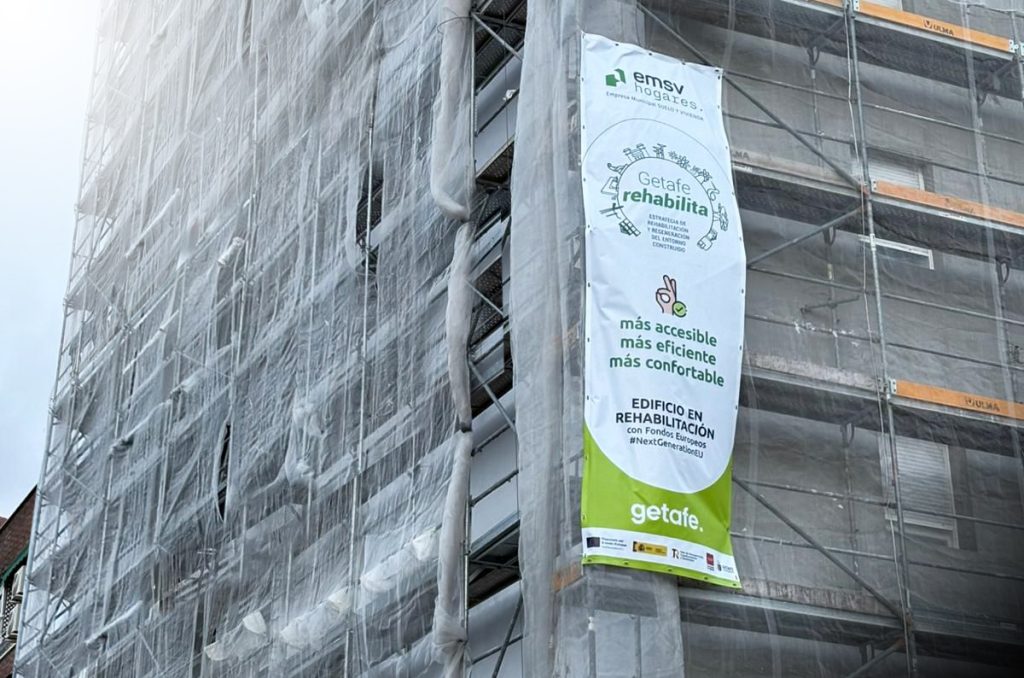
Bearing this in mind, we can facilitate access to affordable housing in two main ways. First, by providing new housing, and second, by renovating existing homes. Creating new housing at an affordable social price is something that we have been doing for the last few years by constructing near-zero emissions buildings. We have already constructed two of them, we are constructing the third one, and we are planning a fourth for next year. They are grade A energy efficiency level buildings designed to guarantee a combination of reduced emissions and lower impact on climate change. The second way is making existing housing accessible by promoting renovation. This means that we renovate homes that – due to their condition, age, or use – cannot satisfy this right to energy.
Consequently, we need to make energy affordable as well. Once we have provided that housing, we make the energy needed to make the house comfortable accessible through a “three-plus-one” approach. The first step is lowering energy prices. We cannot lower energy prices directly because they are regulated or managed by private companies, but we can assist people to choose the right company with the right charge and usage type. The second step is reducing energy demand by acting over the envelope of the building, including thermal insulation, windows, and air infiltration, using both passive and active measures to maintain heat or cold. The third step is producing our own energy. This is well known; we install solar panels to produce clean and renewable energy. This happens after we have raised knowledge about how appliances have to be operated and how to use a heater or a fan effectively.
What is the scale of intervention to counter energy poverty and guarantee the right to energy?
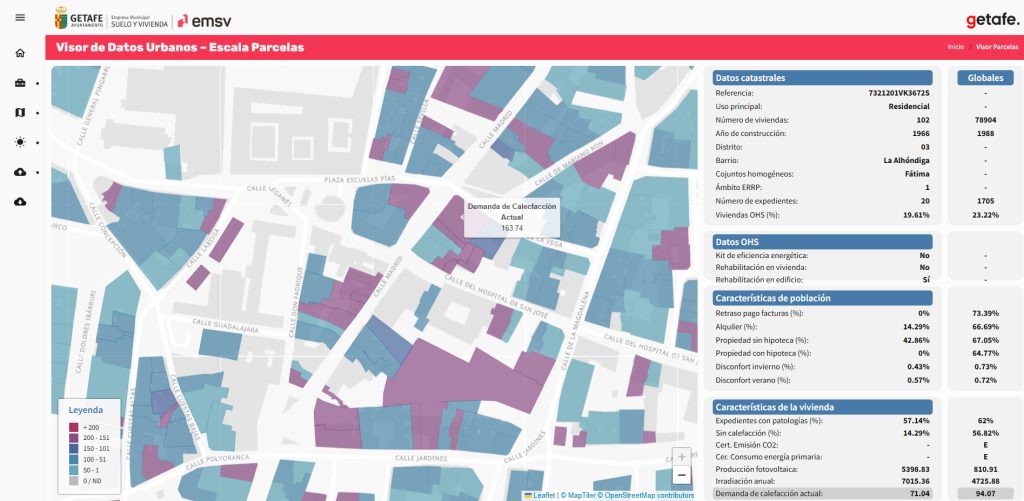
The Getafe city council has been working since 1988 to combat energy poverty. Initially, we implemented independent actions, such as managing grants for energy costs or building new housing. But starting in 2019 with the EPIU project funded by EUI, we developed a methodology to guarantee the right to energy using three scales—home, building, and neighbourhood—and three tools: data analysis, the one-stop shop, and tailor-made resolutions.
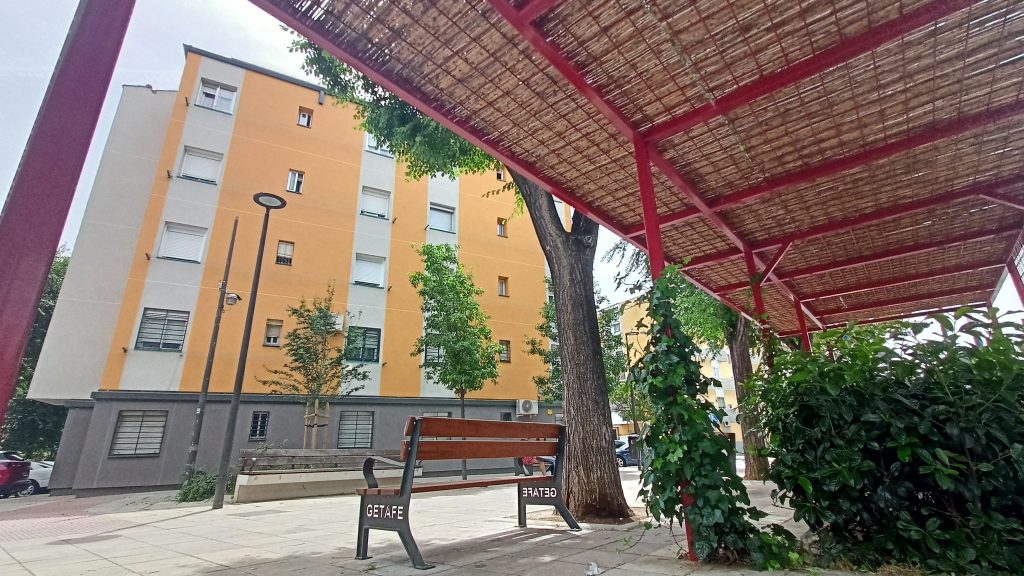
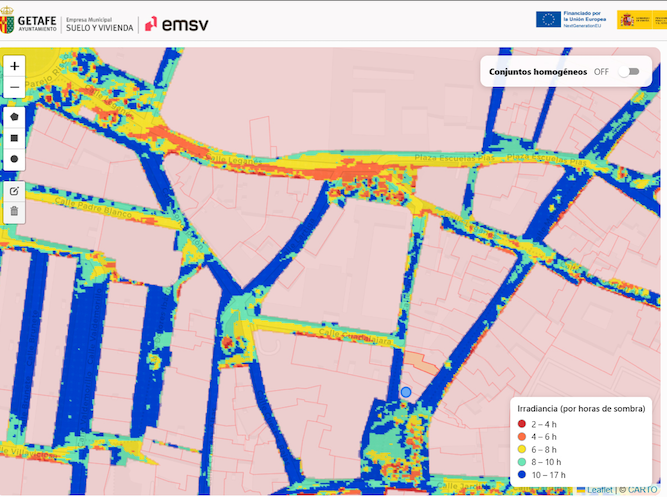
We also detected that you can fight winter energy poverty through insulation, but in summer, the main tool is the air. If the air outside is hotter than inside, intervening in the public space becomes beneficial for the interior. We consider the public space an extension of our house. If you act in the public space, you get the benefit of being more comfortable both outside and inside.
In a climate where outdoor temperatures in the summer can exceed indoor temperatures, acting on the urban environment to lower the air temperature outside is essential for maintaining comfort inside. This holistic perspective encourages residents to view their housing conditions as part of a wider ecosystem, where community-level changes in the street directly impact the habitability of their private apartments.
How do you define energy poverty?
In Brenda Boardman’s 1991 definition, you are at risk if energy costs are more than 10% of your income. But we spotted people spending 0% who are still energy poor because they face the ‘eat or heat’ dilemma. They won’t receive help unless they raise their hand. You start by diagnosing the situation with surveys and sensors to see how energy poverty manifests.
Even with big data technology, you can start with a table, a pen, and paper to ask people about their problems and build a database. Data is really important because you cannot deliver a one-size-fits-all measure for everyone. In Getafe where between 20% and 30% of the population is suffering from energy poverty, we clustered population data to link specific requirements to tailor-made solutions. Any city developing this strategy should start by gathering data and creating a data lake or map.
We created a referral system so that no matter which department you enter, the methodology leads you to the right help. For example, if someone needs help with water supply or papers, we redirect them but also get their data for our system. The end game is that with a finished data lake, we can see if a health problem is actually caused by energy poverty. Unless you fix the house and the mould, you won’t be able to heal the people.
How can you help households to reduce their energy use and costs?
Education about energy is the starting point: we have to start with energy literacy before technical or architectural interventions. Energy literacy includes more conscious energy use and bill optimisation. The primary means to Getafe’s educational transformation is the one-stop shop, a physical assistance point together with consistent workshops and street activities designed to empower families rather than just distribute grants. This model represents a shift in municipal logic: instead of giving money to citizens to pay their bills, the city uses that money to maintain a service that teaches residents how to manage their own energy use. Over three years, we saved more than €1 million in energy costs while spending less than that to maintain the one–stop shop service, proving that education is a far more cost-effective tool for improving housing affordability than direct subsidies.
When someone enters our one-stop shop, we ask for data like their last 12 months of expenses, their building age, but also their family size and incomes. A technician might advise them to lower their maximum power. If you lower it from five kilowatts to two and a half, you may save €25 a month. That is €300 a year, and for 3,000 families, that is a lot of money saved. One family came to us because their bill jumped from €8 to €500; we discovered that others were heating the house by boiling water, some are simply entitled to a social energy allowance, but they did not know it. We advised them on how to take advantage of every kilowatt.
From an environmental perspective, we follow a coordinated strategy reflecting the idea that the cleanest energy is the energy that is not consumed. This cleanest energy is the base for fighting climate change and ensuring comfort levels are met.
How does supporting energy communities match the city’s energy policy?
Helping the creation of energy communities is a way to empower citizens. Most people identify shared energy production with energy communities, but they are not exactly the same thing. When you create an energy community, it is managed by the people, not the municipality. The municipality may be at the beginning of the process as a catalyser or an accelerator, above all until the energy independence of local residents is secured. This allows people to do things we couldn’t do as a municipality, such as buying energy from companies with a lower tariff or sharing kilowatts between different flats or buildings: for instance, a building that produces surplus energy can distribute it to a neighbouring building that lacks production capacity. This model requires a high degree of resident cooperation and education, as it necessitates moving from an individualistic mindset to a community-based approach to resource management. It helps turn you from a consumer to a prosumer.
We have just created the first legally constituted energy community in Getafe. with 34 members. Regarding consumption reduction, that is a tricky question because we at least during EPIU we found that energy poverty measures actually increased consumption by about 4.5%. This is because we work mainly with vulnerable people who were not using heating at all and now do. Our new indicators are comfort, health, and wellbeing. In conclusion, affordable housing is not cheap housing; it must be comfortable, environmentally sustainable, and economically sustainable for both users and the administration.
Interview by Levente Polyák
