
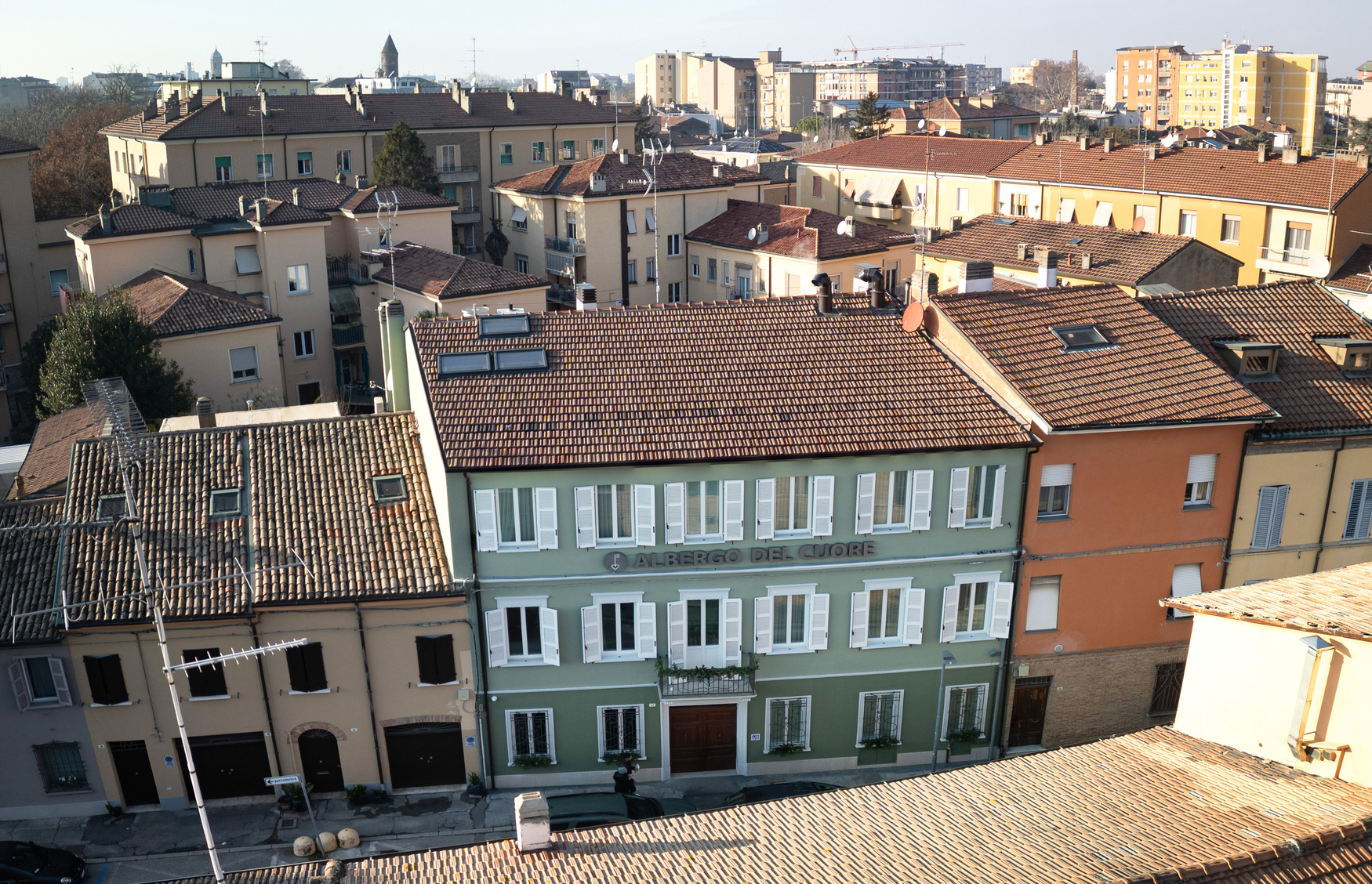
Adjacent to Ravenna’s central railway station, in a neighbourhood where high-volume transit meets the city’s more precarious residential fringes, Albergo del Cuore is rethinking the role of the urban hotel. By renovating a former hotel into the city’s first accessible and inclusive stay, the Cooperativa Sociale San Vitale has created a neighbourhood hub that prioritizes an experiential form of tourism centred on human connection. At its core, the hotel is an engine for social inclusion, where young people with disabilities run the reception, housekeeping, and bistro alongside trained staff. It serves as the pulse of a local ecosystem: the kitchen is supplied by the cooperative’s Mater Naturae social farm, and guests explore the city via Ve.Ra., the cooperative’s bicycle station and repair shop. This synergy of social inclusion, circularity, and sustainable mobility offers a responsible tourism alternative to traditional, extractive models. In this interview, Romina Maresi, President of San Vitale, discusses how this “civic hospitality” prioritises local resource-sharing and social equity.
How did the San Vitale cooperative start, and what need was it responding to?
San Vitale was founded exactly 40 years ago; we celebrated our four decades of history in 2024. We even produced a small commemorative booklet. We inaugurated the hotel precisely during that fortieth year so that this project could best testify to the commitment of the many members who have followed one another over time.
Those founders were predominantly family members of people with disabilities. They were looking, through a cooperative solidarity project, to manage and occupy community spaces. Their goal was to provide a future for their children who, after finishing school, were otherwise destined to lock themselves back inside their homes because there were no real spaces for integration and inclusion.
So, the cooperative was born thanks to the will of these family members. Then, gradually, it took shape and life across many different services. Today, we are about 500 people within the cooperative, so it is an important size today.
What did first direct your work toward social innovation, and why did it become such a defining approach for San Vitale?
I have been the president of the San Vitale cooperative for about ten years, although I have been part of the cooperative for more than twenty. I started out as an educator, working as a job coach for people with disabilities. Through this work, I came to know people in vulnerable situations very closely, and I took on the responsibility of doing everything possible to increase opportunities for their social and professional inclusion.
When I later became president of the cooperative, I realised that social innovation was the key lever to achieve this goal in the most effective way, while also working towards a broader objective of social impact on the community. This meant not only reaching individual employment goals, which are essential, but also changing culture and attitudes towards the inclusion of people with disabilities.
We wanted to do this through concrete projects that could show this is not an abstract idea or a matter of good intentions, but something that is genuinely possible and real, and that can represent an opportunity for both communities and individuals. This is what led me to work within the framework of social innovation.
How does social innovation translate into the specific projects and assets the cooperative manages?
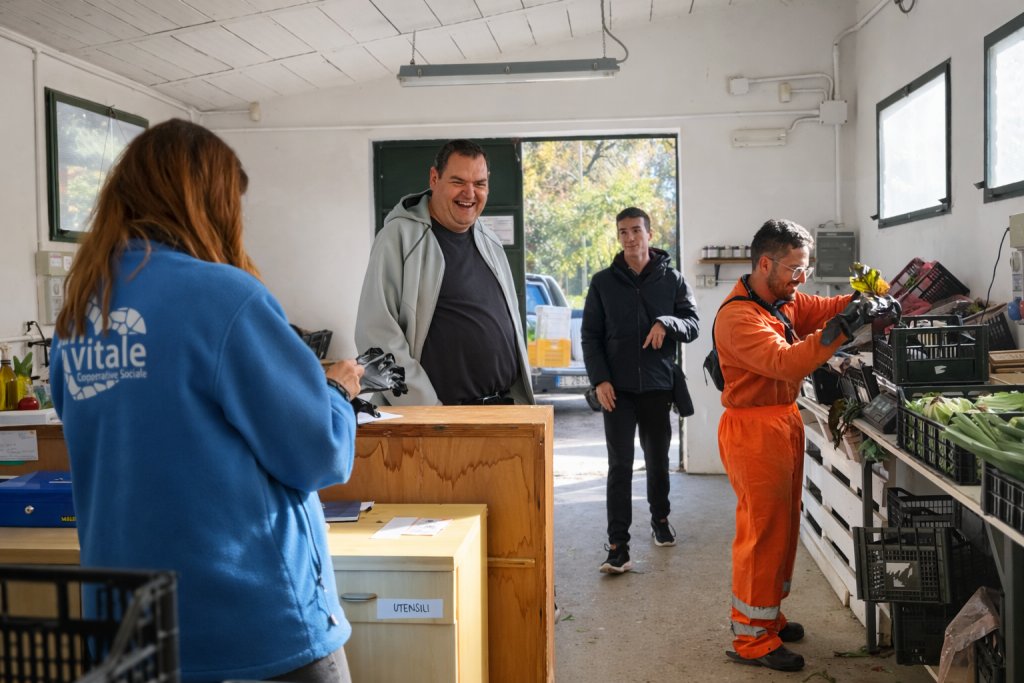
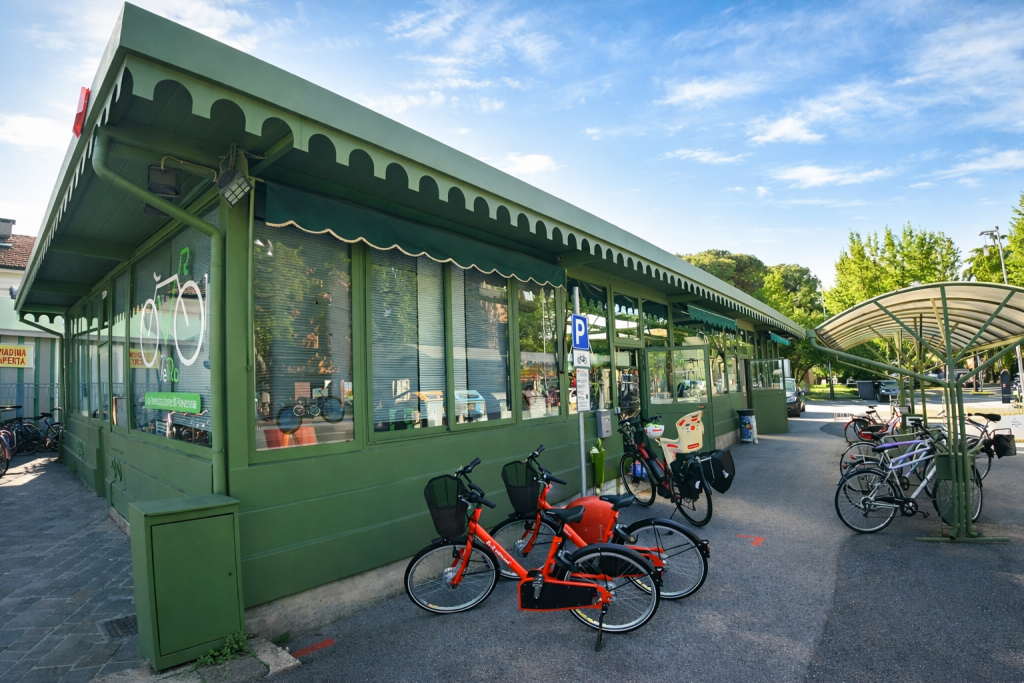
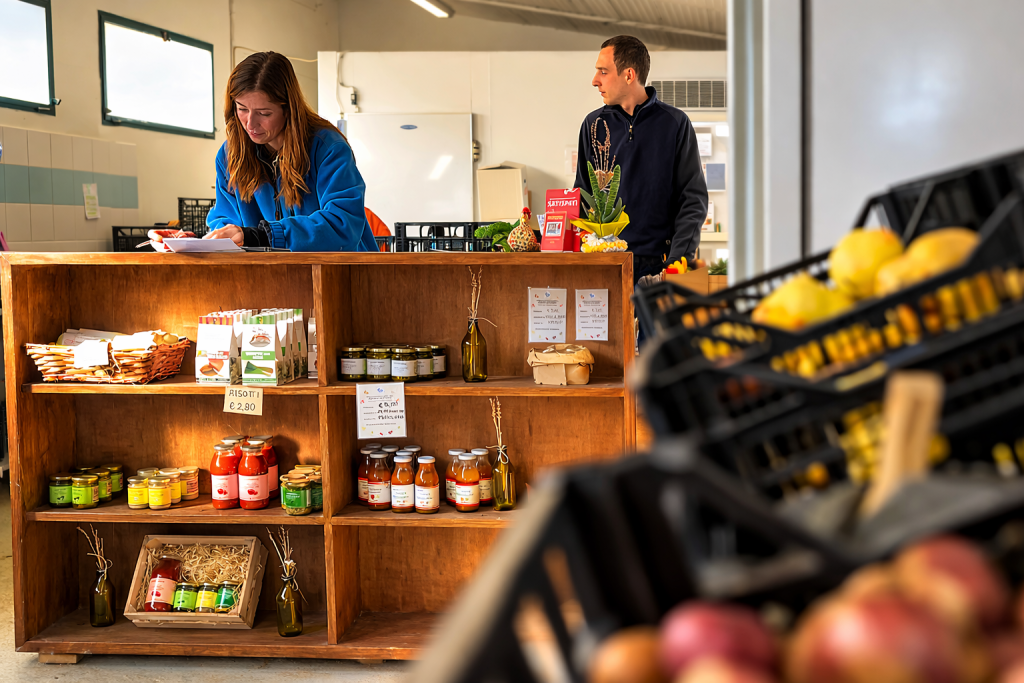
Our main assets are centred around accessible and sustainable tourism, but also sustainable mobility. You saw our bicycle station, with which we are also carrying out a major cultural operation here, which has been present in Ravenna for some time. But we have the entire field of social agriculture, which has also an inclusive and sustainable approach with respect to agricultural production that generates value and does not extract value from the land.
All of this could be networked in a sort of circular economy that takes its leverage from the cooperative and places at the centre the people we try to represent best with our proposals, who inhabit our spaces and are the protagonists of our initiatives.
Can you talk a little about the different services you offer?
The cooperative carries out job placement services in very diverse areas of work, from environmental hygiene to green maintenance, city parks, gardens, cleaning, the tourism sector which we have just inaugurated, mobility, and the management of refreshment points.
All of this is done somewhat in the ‘San Vitale manner’: we make every context an opportunity to provide multiple layers of value simultaneously. The value you encounter is not only that of inclusion, nor only that of product quality, but rather all these factors put together.
In addition, the cooperative also performs educational support services for vulnerable people. However, we try to integrate these areas as much as possible so that even the educational support services act as a driving force. This allows individuals to emancipate themselves until they conquer a ‘place in the world’: a home, a social experience, a job, and a physical space. Ultimately, we are focused on a profound improvement in people’s quality of life.
After working with green spaces and social agriculture, why did you choose a hotel as the next step in this trajectory?
This has also been a long-held dream of mine. I started within the cooperative as an educator, but I am also a certified tourist guide. When I was young, I worked as a guide, accompanying tourists; I often encountered requests for a particularly welcoming location. At the same time, I was confronted with the need for a place that could also welcome people in difficulty.
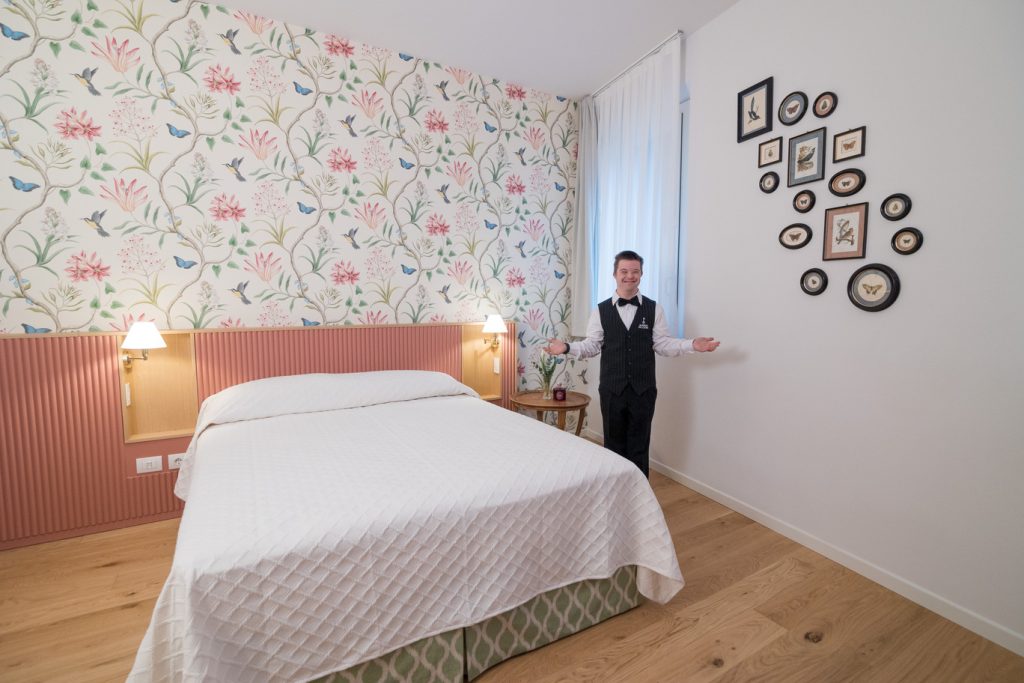
People with motor, physical, or even intellectual disabilities often struggle to enjoy a holiday because they do not find adequate facilities to meet their particular needs. So, I always held a dream of creating a place where I could hold these two things together: a capacity to offer a truly comprehensive and inclusive welcome and to testify that inclusion is a value for everyone. This meant having a group of young people with disabilities as the protagonists of the space, who offer their competence and their work to those who decide to come and visit us and be guests of our reality.
Were they any good practices that inspired you?
In Italy, there are other ethical hotels in the sense that they employ people with disabilities. What is different here is that there is no other context that brings together all the values that are present in the Albergo del Cuore. This is something we consciously designed.
Recently, we had a visit from the Minister for Disabilities, who appreciated the project very much and told us that it is the only one she has seen in Italy with these characteristics. What makes it unique is the way it combines accessibility, job inclusion, and the idea of a neighbourhood shop — an open, everyday space.
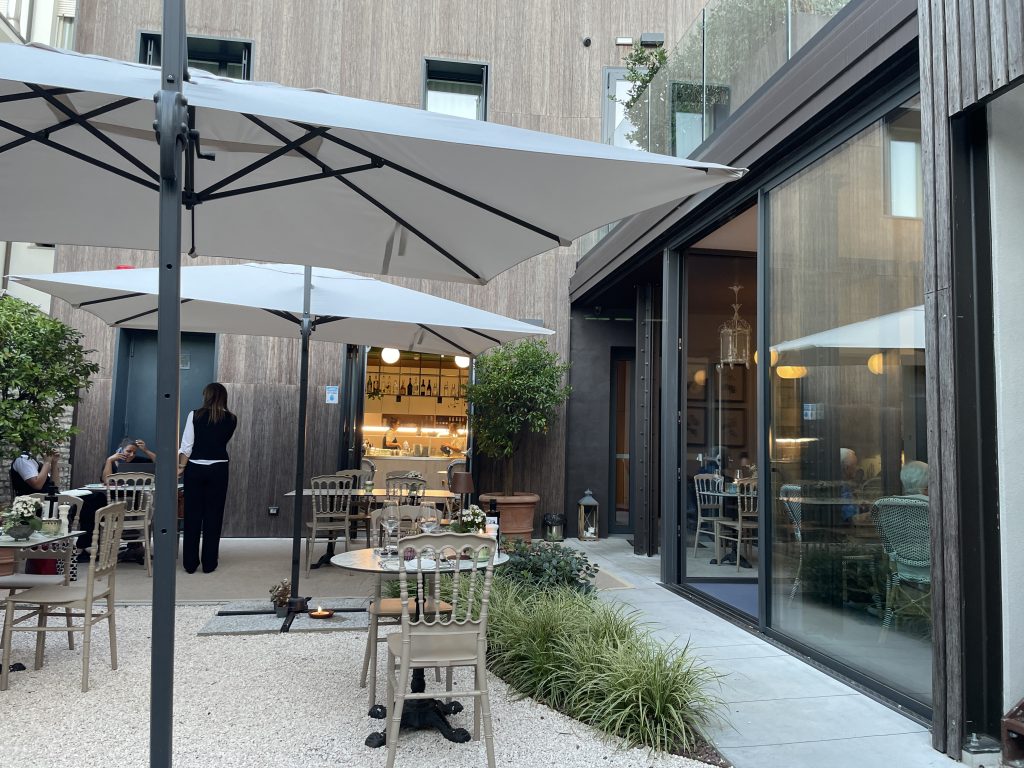
This is a hotel that is not only for tourists. It is also for the citizens of Ravenna, for young people, for elderly people who can come in, buy something, eat well, and meet their daily needs without having to move to another neighbourhood. It is a place that supports autonomy and everyday life, not just hospitality.
I believe all these values are brought together in a beautiful place. We renovated the building with great care, without drawing inspiration from existing models. We chose everything ourselves — from the internal layout to the wallpaper, right down to the bamboo in the garden. We did much of this work directly, even though we were supported by a team of architects in the design process.
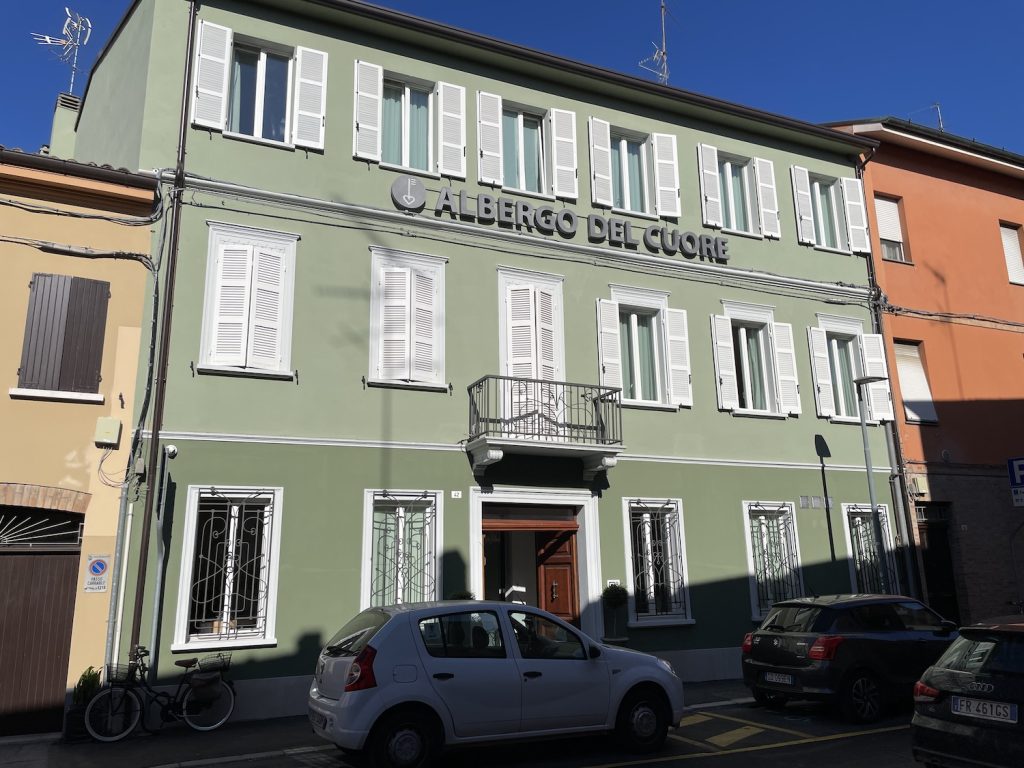
These walls are the same ones that have always been here. This building has always had a special welcoming function: during the Second World War, it hosted displaced people from the city. In that sense, this vocation for hospitality is part of the DNA of this place and of this part of the city. We believe we have carried that forward — allowing it to evolve, while remaining faithful to its original character.
How does the presence of the Albergo del Cuore interact with the social and spatial dynamics of the neighbourhood?
We are in the heart of the city, close to the railway station, in an area that has received a lot of attention in recent years. As often happens around stations, this is a place where different kinds of social fragilities tend to concentrate. In some respects, there is a risk of degradation, and many residents have expressed concerns about safety, especially for elderly people moving through the neighbourhood.
We are visited very frequently, and for us this is extremely positive and encouraging. People leave very positive comments. Many say they did not expect to find such a beautiful place. They appreciate the initiatives we regularly organise for the community.
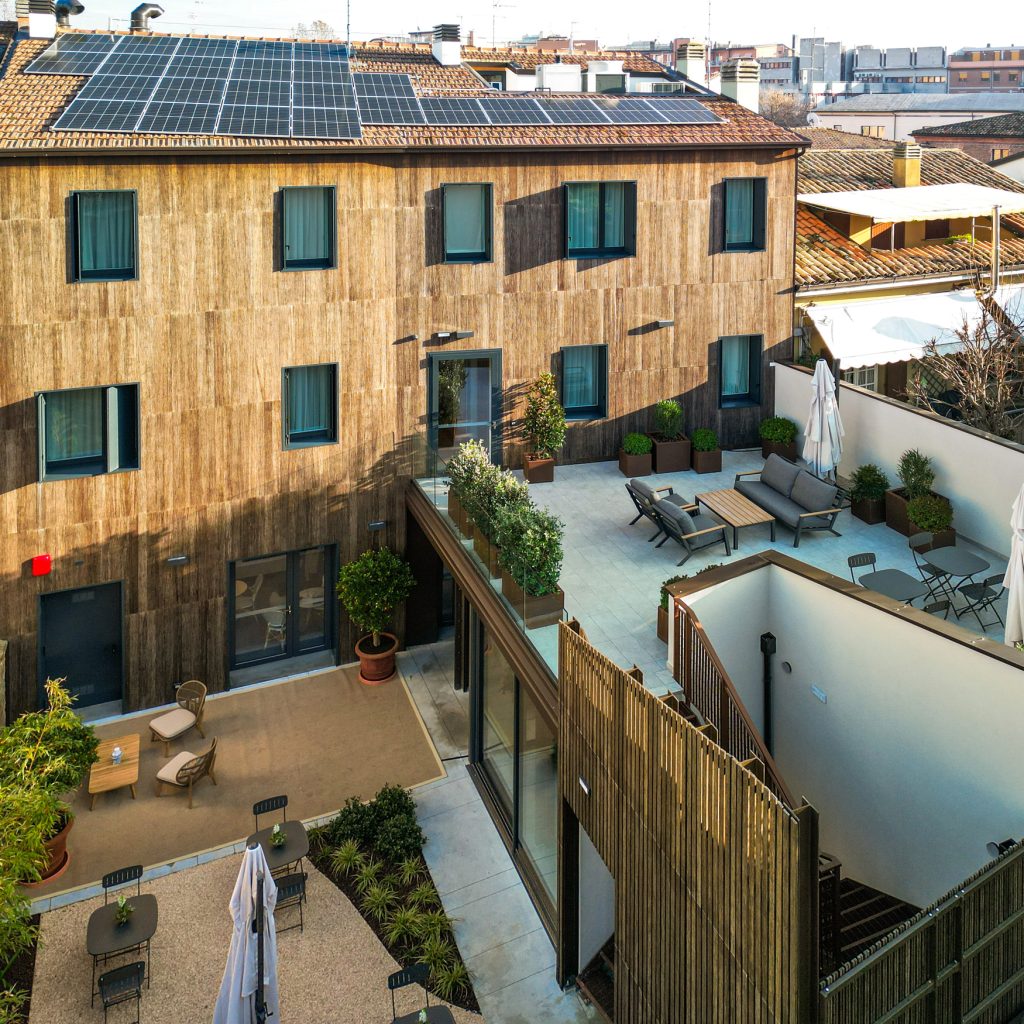
We believe that a cooperative project based on social innovation can offer a way of responding to these challenges. Starting with a significant investment in the regeneration and architectural requalification of a beautiful building, the idea was to create a place that attracts positive presences — people who, in turn, attract other people. This dynamic can help reduce situations of social discontrol and some of the difficulties that had previously characterised the area.
The objective is to invest precisely in neighbourhoods where fragilities risk becoming more concentrated, and to do so through projects that generate openness rather than exclusion. In this sense, the Albergo del Cuore is first and foremost a neighbourhood regeneration project, starting from hospitality but extending well beyond it.
We also hope that this example can encourage further investment by other local actors. Since we began, the municipal administration has initiated the requalification of a nearby parking area, and other spaces are gradually being transformed. In this way, our project has acted as a lever for change from the bottom up — not through law enforcement or containment alone, but through emancipation, integration, and the valorisation of differences.
How has the presence of the hotel been received locally, and what effects is it already having on the surrounding area?
For example, we are about to host a full day dedicated to England. We will feature ceramics and prints, connected to the recent opening of the Byron Museum in Ravenna. We wanted to create a specific form of welcome around that theme. Then we will do France, and other initiatives focused on the valorisation of the territory. People are responding very well — both the residents of Ravenna and those who live in the immediate neighbourhood. People come for breakfast in the morning, they come to shop, they come for lunch or dinner. They like it very much. And they ask questions: who works here? How was this place built? Is the team mixed?
We have a colleague who is a professional educator. She is responsible for supporting and training people with disabilities who enter our project and our Training Academy. We have structured a real academy, with the goal of training people to work in this context. But our most important objective is that the people trained here can also go on to work in other accommodation facilities.
So the impact is not limited to what happens within this building. It is about the change we can generate in the wider community. The aim is to move from the idea of a single inclusive structure to that of an inclusive community. A city that opens its arms and includes, rather than delegating accessibility and inclusion to one isolated place.
For this reason, we would like to establish collaboration agreements with other accommodation facilities, so that they, too, can welcome people with disabilities who have trained in our academy and take inspiration from the experience of the Albergo del Cuore.
Where do the young people who work here come from, and how are they selected to become part of the team?
The cooperative has long had a structured collaboration with socio-health services that support people with disabilities. Some young people arrive through referrals from these specialist services, while others apply directly to the cooperative.
From there, we design a selection and entry pathway that starts with the Training Academy. The training period is usually planned for one year. Training cannot last too long, otherwise it risks becoming an open-ended space without a clear outcome. This one-year duration also makes sense because many of the young people who enter the Academy have already completed other training paths, for example in other areas of the cooperative, where they acquired basic skills.
Here, they enter a professionalising pathway, so it cannot last longer than a year. If the outcome is positive, they can remain working in the hotel. At the moment, all the young people who are integrated here are employees of the cooperative — we actually signed their employment contracts yesterday.
At the same time, our goal is not only to create employment within this hotel. The real challenge is to accompany people towards other workplaces as well, and to help other companies and organisations in the area understand that people with disabilities are a resource — not a burden, but a value.
How does the coexistence between the trainees and the professional staff actually work day to day?
It is extraordinary. It is a very beautiful and important mix, because beyond the professional educators who are present, the other professional roles also generate change. The barista, the cook — they all become job coaches. In this sense, they become master craftspeople who support the young people throughout their training.
As one educator said earlier, this change does not affect only the young people in training, but the entire team. This is a very powerful dimension of the project. All the professionals who work here feel touched by this process and by the relationships it creates, which offer real opportunities for both personal and professional growth.
How do guests find you, what motivates their stay, and how do they reflect on the experience afterwards?
Some guests arrive through online platforms. When people come via a platform like Booking, they usually know very little about who we are. Booking is a system that works, of course, and that’s fine. But guests who arrive this way often discover the reality of the hotel only once they are here, and they are almost always very positively surprised.
Others, instead, do more research beforehand. They visit our website, look at our history, our images, and the project behind the hotel. These guests arrive already more open and prepared to engage with our reality.
Overall, we have received an extraordinary level of appreciation from our guests. Some genuinely want to learn more, hear the stories, interact, and build relationships with the people who work here. Others are less interested in that aspect, and that difference is completely acceptable.
Some guests are particularly impressed by the location, or by the innovative character of the place from an urban or architectural point of view. But for the majority, what really leaves a mark is the human dimension — the human factor.
When it comes to communication, how openly do you talk about the social aspect of the project? Have you ever worried that it might discourage some guests?
Yes, we chose a strong and very focused communication approach to underline this idea: that accessibility means creating the conditions for good use — for the use of a high-quality space by everyone, regardless of intellectual ability or specific needs.
It was challenging. But today, this really is everyone’s hotel. It is used by all kinds of people: people with disabilities, people with motor impairments, visually impaired people, people with intellectual disabilities, but also many people who simply enjoy the place without having any particular needs, other than the desire to be in a context that tells a different story from conventional hotels. And this is something that has truly happened.
How do you involve tourists in the experience beyond their stay, and how do you encourage them to reflect on and share the value created through it?
We try to involve tourists by guiding them through an experience that goes beyond simply staying in the hotel. Our aim is for guests to be actively involved, so that they can later talk about their experience and share what it generated in terms of value. This is complex and demanding, but we are gradually organising ourselves to do it better. One of our investments has been to bring someone into the team who focuses specifically on the hotel’s internal communication. This person meets guests and encourages them to leave a story or a testimony. Otherwise, this aspect often ends up only as a review, which does not really explain how the tourist was involved or made responsible.
For this reason, we have invested in a young person who has been with us for about ten days, whose task is to document and tell, from inside the life of the hotel, what kind of value an experience like this can generate. These are the investments we are making.
At the same time, there is not yet a structured network in the city. More and more people are coming to spend time with us and take part in our initiatives, but for now it tends to stop there. We know we could do much more.
Although it functions as a regular hotel for tourists, the Albergo del Cuore follows a very different approach. How does its operating model — and in particular its economic model — differ from that of a conventional hotel?
There are several factors to consider. First of all, we are working with a team in which the productive capacity of the young people cannot be compared to that of professionals who do not need additional support or specific training. Our young people have reached important levels of autonomy, but they always require supervision and monitoring by professional staff.
At the same time, we are a small hotel, with just ten rooms. We do not rely on constant price adjustments or aggressive market strategies. Instead, we try to clearly define our offer and our identity, with the hope of being chosen for who we are, and not only for how much we cost.
For this reason, our model is built around economic sustainability rather than profit maximisation or competitiveness in the traditional sense. Our goal is to break even. That is the objective, and in July we managed to achieve it, which was an important milestone for us.
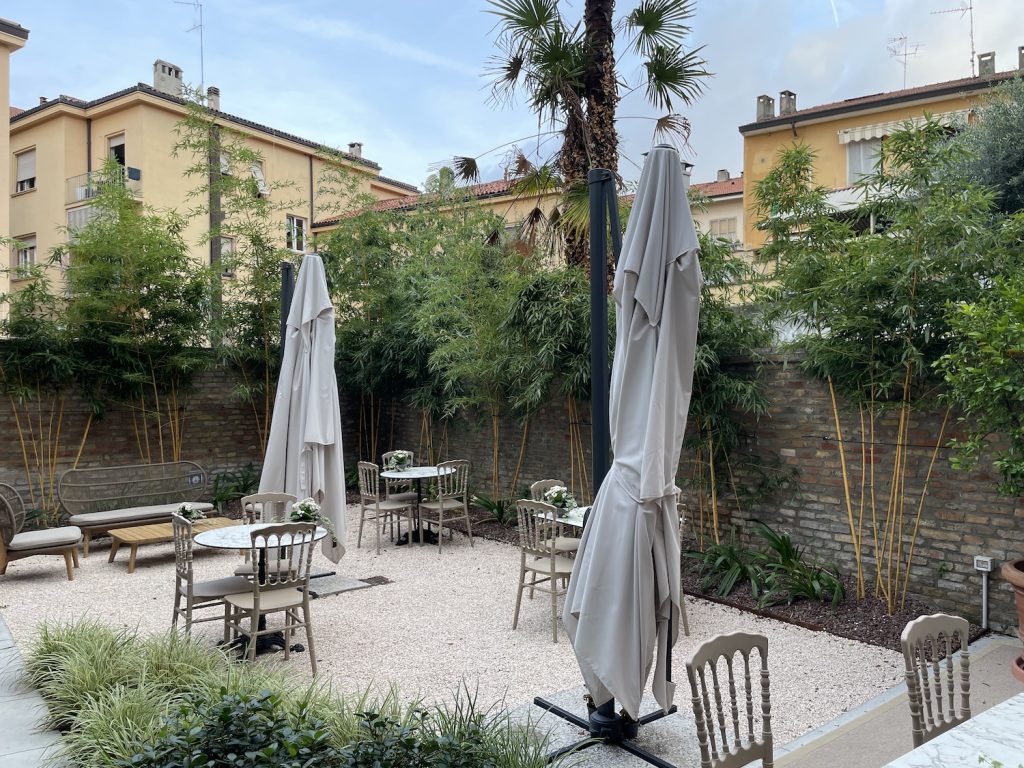
However, the fact that we integrated a restaurant project within the hotel is also very important from an economic point of view. It gives us additional leverage to keep proposing activities, to be frequented, and to build a stable clientele. Even if at certain times we might see a decrease in hotel guests, we can expect an increase in people coming for lunch, dinner, and for the initiatives and events we organise.
From the perspective of the overall budget, I tried to keep all these different levers active, so that they can compensate for more critical moments. We are aware that winter in Ravenna, with the fog, will probably be a quieter period in terms of hotel stays. But these complementary activities help us manage seasonal fluctuations and maintain balance.
With this project’s social mission and public value in mind, how can the Municipality and the Region support the work? What does cooperation with them look like in practice?
The collaboration is very strong. Since June, for example, the Training Academy connected to the hotel has been partially supported through public funding. This support is not for the cooperative’s permanent staff, but specifically for young people entering vocational training. In this way, public institutions have recognised both the innovation of the Albergo del Cuore model and the concrete results it delivers, and have decided to contribute. For us, this is already a significant achievement.
At the same time, regional policies are becoming increasingly attentive to a different kind of tourism — one based on values, inclusion, and social responsibility. In our territory, not only the Albergo del Cuore is being recognised, but also related initiatives such as the “Beach of Values”, which you saw by the sea and which is now being taken up in other places like Rimini and Cervia, even if still on a small scale.
The Region sees these initiatives as spaces with real potential for change. From time to time, it therefore activates targeted measures that can support inclusive hospitality projects like ours — not to replace us in managing or sustaining the hotel, but to offer support at more delicate moments. This is our first year: the summer went well, spring and autumn are going very well. What winter will bring, we still don’t know.
How significant is it that this initiative was born out of Romagna’s cooperative sector?
I am also the vice-president of Lega Coop Romagna, which is an association for us that represents the history of the cooperative movement. And the cooperative movement has found an extraordinary expression in Romagna. Just this year, we celebrated the 80th anniversary since the cooperative movement restarted after the fascist closure and crisis in our territory, it has regained life, strength, and planning capacity. And these projects can only be cooperative projects because they leverage people’s ability to be together and produce value together. Our strength is the fact that we are together and that we believe that the group, closeness, mutualism, and solidarity are our founding values. It happens in Romagna because Romagna is cooperative.
What are your plans for the future?
We have a long-term project that is already underway. It focuses on the valorisation of the specific qualities and identities of the territory. This includes the products we prepare ourselves through our social agriculture supply chain, but also the wider network of local producers we work with. Over time, we have built strong and meaningful partnerships with them, and they also use the hotel as a place to present and promote their products. In this sense, the hotel becomes a kind of theatre, with many protagonists drawn from the network of trust and collaboration we are developing.
We will continue to organise events centred on local and seasonal products — for example Chestnut Sundays or Pumpkin Sundays — which are always very well received. These initiatives are connected to the roots of Romagna, to our local identity, and to food, the restaurant, and hospitality as a dimension that runs through everything we do.
As for the long run, one of the cooperative principles that I love most is the principle of intergenerationality. Projects within a cooperative continue even when people change and remain the heritage of the community. So, we all found ourselves united in this thought that our years of management, of commitment, would have left a jewel like this to the city of Ravenna, which is neither mine nor belongs to today’s members, but will belong to those of tomorrow and to the community in which we lived.
Interview by Levente Polyák
